
-
E-mail
-
WhatsApp & WeChat
WhatsApp & WeChat
 Blister Packaging Line
 Automatic Counting Machine Line
 Liquid Filling Machine Line
 Powder Filling Machine Line
 Granule Filling Machine Line
 Bag Packing Machine
+86 151 6187 8967
Stick Pack Machine
The number that decides whether a multi-lane stick pack machine passes a pharmaceutical audit is not its headline sticks-per-minute — it is the lane-to-lane weight CV, because a shared dosing manifold will always starve the outer lanes first and turn your "800 sticks/min" line into a rejection cluster on lanes six through eight that no one notices until the QC lab weighs a cross-section. I have commissioned enough ORS and powder stick lines to say it flatly: a machine that is fast but uneven is worse than a slower one that is uniform.
Stick Pack Machine
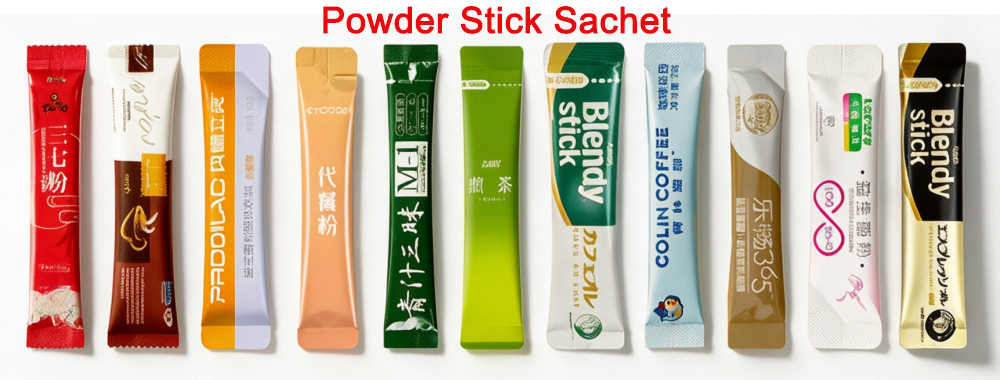
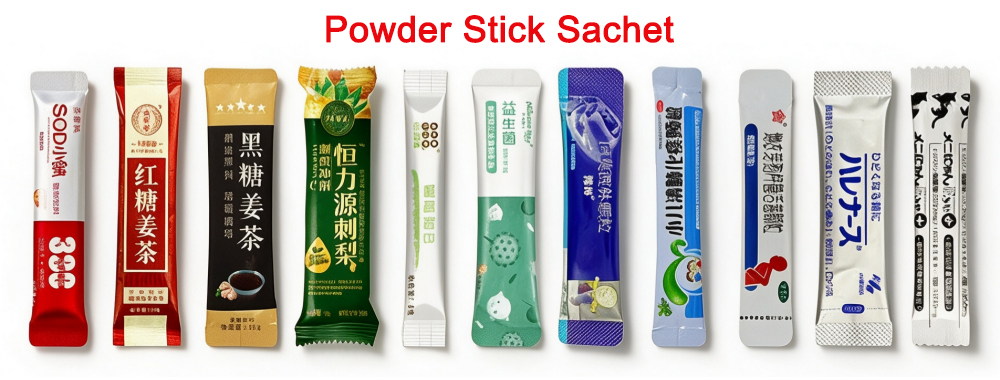
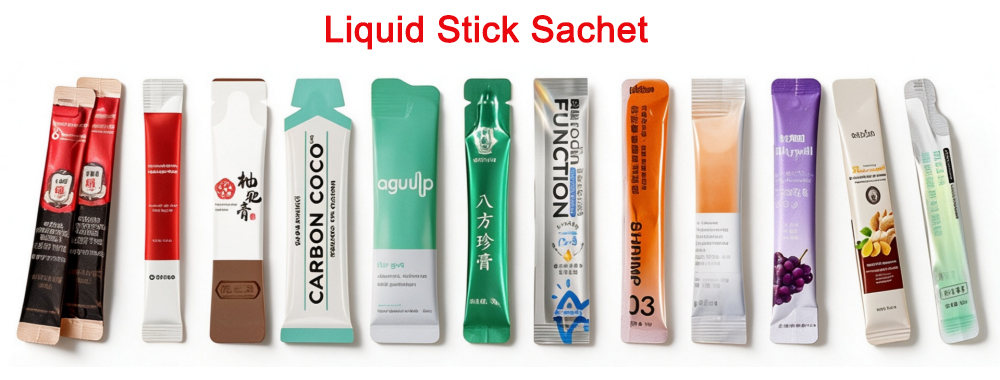
A multi-lane stick pack machine is several single-lane fillers running off one web of film, and the moment you gang them, the weakest lane sets your compliance ceiling. The powder feeds from a common hopper through a manifold to individual augers, and any pressure drop, any film wander, any one lane's auger wearing differently shows up as a weight gradient across the stick bank.
The pain is insidious. The line "runs fine" because the average is in spec, but lane 7 is 5% light. In a pharma context that is a sub-potent dose — a patient gets the wrong electrolyte load — and it passes the line check-weigher because the check-weigher sees the average stick or, worse, only samples one lane. By the time the regulator's lab pulls a random stick, you have shipped a non-uniform batch.
The fork in the road for stick pack machines is how the dosing is distributed. The "single-servo, shared manifold" design is cheap and compact; the "independent-lane or independent-lane-group dosing" design costs more but removes the gradient. A third variant uses a single auger bank with individual trim servos per lane, which is the middle ground I often recommend for 6–8 lanes.
| Parameter | Single-servo shared manifold | Independent lane-group dosing | Per-lane trim servo |
|---|---|---|---|
| Lane-to-lane CV | ±3–5% | ±1.0–1.8% | ±1.2–2.0% |
| Outer-lane starvation | Severe by lane 6+ | None | Corrected by trim |
| Film tracking method | Edge guide only | Edge + servo web control | Edge + servo web control |
| Speed (8-lane) | 700–900 sticks/min | 750–850 sticks/min | 750–880 sticks/min |
| Cost factor | 1.0× | 1.4–1.7× | 1.2–1.4× |
| Best use | Non-critical granules | Pharma ORS, potent | Mid-tier pharma |
For any product where dose uniformity is a safety issue — ORS, effervescent, nutraceutical powders — I will not specify the shared manifold. The 0.4–0.7× price delta is paid back the first time you avoid a batch recall. Independent lane-group dosing with servo web control is the configuration I commission for export-grade pharma.
The dataset below is from an oral rehydration salt line I brought into spec. These are offline check-weigh results across all eight lanes after a 4-hour stabilized run.
Location / product: Dhaka, Bangladesh. A pharmaceutical manufacturer producing 4.1 g oral rehydration salt sticks — a glucose / sodium chloride / potassium / citrate blend — for both domestic DGDA supply and Middle East export.
Throughput: 8-lane machine, ~800 sticks/min total (≈100 sticks/min per lane), 4.1 g target dose.
Working conditions: Non-air-conditioned packing hall, 30–34 °C, RH 68–82%. Film was a 38 µm PET/PE laminate, 17 mm finished stick width.
The problem: Lanes 6–8 ran about 5% light versus lanes 1–3. The line average sat in spec, so the single-point check-weigher passed it, but a cross-section weigh showed a 4.8% lane-to-lane CV.
Root cause: The original build used one shared auger manifold feeding all eight lanes; the pressure drop along the manifold starved the outer lanes, and the film wandered up to 2.5 mm off-center at the outer lanes because the edge guide alone couldn't correct web drift on a narrow lane bank. Lanes 6–8 both under-filled and occasionally missed the throat.
The fix: We split dosing into two independent 4-lane groups, each with its own hopper and auger bank, and added a servo-driven web control with an edge-guided film tracker that held the lane centerline to ±0.4 mm. A per-lane-group check-weigher trim was closed at 20-stick intervals.
The result: Lane-to-lane CV dropped from 4.8% to 1.4%, and outer-lane light-fill disappeared. The line held 800 sticks/min with a uniform cross-section, passing both DGDA and the SFDA export audit on the same batch.
| Metric | Before fix | After fix |
|---|---|---|
| Lane-to-lane CV | 4.8% | 1.4% |
| Outer-lane deviation | −5.0% | −0.6% |
| Film wander (outer lane) | 2.5 mm | 0.4 mm |
| Sticks/min per lane | ~95 (uneven) | 100 (uniform) |
| Web tension variance | ±12% | ±3% |
The Dhaka result is the rule, not the exception: once you give each lane group its own feed and you stop the film from walking, uniformity follows. The speed barely changed; the compliance posture changed completely.
For EU export, the stick pack line must satisfy EU GMP Annex 1 expectations on contamination control and, where it is a medicinal product, full batch documentation. The per-lane CV report becomes part of the batch record, and lane-to-lane uniformity is exactly the kind of attribute EU inspectors probe on a cross-section weigh. ISO 15378 for primary packaging materials also applies to the printed film, so the stick laminate supplier must be in your quality agreement.
If the ORS is marketed as an OTC drug in the US, 21 CFR Part 211 subpart F requires that the manufacturing process consistently produce a uniform dose, and the lane gradient is a direct process-control attribute. 21 CFR Part 11 governs the electronic CV log from the check-weigher — it must be audit-trailed and tamper-evident. A shared-manifold machine with no per-lane record would fail a Part 11 review on dose-uniformity evidence alone.
Bangladesh's DGDA, like other ASEAN regulators, expects in-country validation at local temperature and humidity, because ORS powder is hygroscopic and bulk density moves with the Dhaka monsoon RH. The commissioning I described was validated at 78% RH, not a 50% lab. For export into the region, WHO-GMP equivalence is the accepted benchmark, and the lane-uniformity data is the centerpiece of that dossier.
Saudi SFDA and UAE MOHAP import ORS under strict uniformity and labeling rules; the 1.4% lane-to-lane CV from the corrected Dhaka line was the evidence that got the export license. They also expect heat-stable seals — the stick fin seal must hold at 40 °C / 75% RH storage — so I spec the seal jaw profile and verify seal strength on aged samples, not just fresh ones.
| Item to pin down | Why it matters |
|---|---|
| Dosing architecture (shared vs independent) | Determines lane gradient |
| Per-lane / per-group check-weigh + trim | Evidence of uniformity |
| Film tracking method | Outer-lane accuracy |
| Web tension variance spec | Seal and fill consistency |
| Lane count vs film width | Avoids over-laning |
| Local RH validation condition | Real-world dose uniformity |
| Seal strength on aged samples | Export climate survival |
Decide from dose, film width, and required output — not a vanity speed. For a 4 g ORS on 17 mm sticks, 8 lanes at ~100 sticks/min per lane gives you 800/min without over-laning. Pushing to 12 lanes on the same film width invites tracking failure on the edges.
Yes, but only with independent or group-independent dosing plus per-lane check-weighing. On a corrected 8-lane ORS line I hold 1.4% lane-to-lane CV. A shared manifold will not get you below about 4% no matter how good the auger is.
Both, but powder is the harder case because it is hygroscopic and bridges. ORS powder needs the same auger-and-agitator thinking as a single auger filler, scaled per lane. Granules are more forgiving but still need independent feed to avoid the outer-lane gradient.
PET/PE and PET/AL/PE laminates in 30–50 µm are standard; metallized gives moisture barrier for hygroscopic ORS. The key is flatness and low static — a curly film defeats narrow-lane tracking. I qualify the exact film roll during acceptance, not a substitute.
Changing stick width means re-forming the collar set and re-zeroing the lane centerline; budget 30–50 minutes for a width change plus 15 minutes of empty-run tracking verification. Film-type changes are faster, around 20 minutes, if the lane geometry is unchanged.
On a 17 mm stick, a 2 mm film wander moves the lane centerline by more than 10% of the stick — the auger misses the throat and the seal cuts into the product. Servo web control holding ±0.4 mm is what keeps the outer lanes honest, and it is the difference between a uniform and a梯度 batch.
No. A single-lane check sees one lane and misses the gradient. You need per-lane-group weighing with a CV report across all lanes, or you will certify a batch that has a 5% light lane hiding in it. For pharma, that is not acceptable and an inspector will find it.
Written by Helen Xu | Chief Industrial Application Engineer
Helen Xu is a Chief Industrial Application Engineer with 9 years of specialized experience in packaging machinery and liquid filling machine design, equipment model selection, and full production line process optimization. He focuses on delivering customized packaging & filling solutions for pharmaceutical, food, and chemical manufacturing industries, with mature practical expertise in GMP compliance, ISO 9001 quality management standards, and turnkey large-scale filling & packaging production line integration.
E-mail Us
Chat With Us


