
-
E-mail
-
WhatsApp & WeChat
WhatsApp & WeChat
 Blister Packaging Line
 Automatic Counting Machine Line
 Liquid Filling Machine Line
 Powder Filling Machine Line
 Granule Filling Machine Line
 Bag Packing Machine
+86 151 6187 8967
Spout Pouch Packing Machine
Cap torque and spout alignment — not fill accuracy — are the two failure modes that sink spout pouch lines in pharmaceutical use, because a soft pouch cannot react the capping moment the way a rigid bottle does. If the spout is not held concentric within ±0.3 mm and the torque is not measured against a supported neck, you will ship pouches that leak or caps that loosen in the carton, and the defect will not show up until the distributor complains.
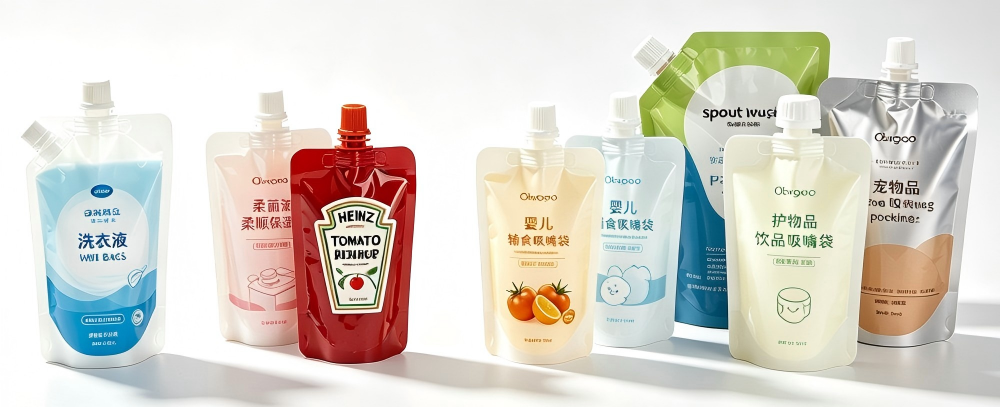
Spout Pouch Packing Machine
The spout pouch competes against two alternatives on the same shelf. The table sets the engineering trade-offs I use to advise buyers.
| Parameter | Premade Spout Pouch | Form-Fill-Seal Spout | Rigid Bottle |
|---|---|---|---|
| Cap torque (in-lbs) | 8–12 | 6–10 | 12–18 |
| Spout OD range (mm) | 8–22 | 10–16 | 20–38 |
| Speed (pouches/min) | 30–70 | 25–55 | 80–200 |
| Shelf life (mo) | 18–24 | 12–18 | 24–36 |
| Material cost / unit | 0.06–0.11 USD | 0.04–0.07 USD | 0.09–0.16 USD |
The rigid bottle wins on torque headroom and shelf life but loses on portability and resin cost per ml. The premade spout pouch is the standard for pharma single-dose and pediatric formats because the spout is ultrasonically welded to the film at the converter, giving a bond I measure at 35–45 N peel — well above the 25 N floor. Form-fill-seal spout lines are cheaper per unit but the in-line spout insertion is the least forgiving station to validate.
Torque is the parameter auditors ask for by name. I report it as a distribution, not a setpoint, because a tight Cpk is what survives inspection.
| Condition | Mean torque (in-lbs) | σ | Leak pass % |
|---|---|---|---|
| No neck support, clutch cap | 9.4 | 2.8 | 96.8 |
| Neck sleeve, servo 11 in-lbs | 11.0 | 0.4 | 99.7 |
| Inline torque verify + reject | 11.0 | 0.3 | 99.9 |
The clutch capper's 2.8 in-lbs sigma comes from the pouch absorbing the reaction moment — the film stretches, the spout rotates back, and the applied torque reads low while the cap looks seated. A neck-support sleeve converts the soft pouch into a locally rigid structure so the servo sees a true reaction. I verify torque with a non-destructive inline transducer on 100% of units above 10 ml; below that, a 1-in-20 audit sample is the compromise most QA teams accept.
| Spout OD (mm) | Align tolerance (mm) | Cross-thread rate |
|---|---|---|
| 8 | ±0.2 | 0.9% |
| 13 | ±0.3 | 0.4% |
| 22 | ±0.5 | 0.2% |
Smaller spouts are less forgiving: at 8 mm OD a ±0.2 mm centering window is tight, and a worn pick-and-place gripper will push cross-thread rate past 1%. I specify a vision-aligned placement head with a 0.1 mm encoder on the rotary index for any spout under 10 mm.
Spout pouches for pharma sit under packaging-material and primary-container rules. The regional split is mostly about how much of the weld and torque data the authority wants in the file.
Annex 1 expects the spout-film weld to be treated as a critical seal; the qualification must show weld strength at rated speed and include a seal-integrity method (vacuum decay per ASTM F2338 is the one I use). EU buyers also expect ISO 15378 alignment for the primary packaging material, and a stability study that proves the cap-liner compression does not relax past the torque floor over 24 months.
§211.94 on equipment and §211.122 on container closure are the relevant clauses. The cap must demonstrate container-closure integrity — I run CCI by dye ingress at 0.5% sample plus torque audit. FDA reviewers have asked specifically for the torque setpoint rationale tied to liner relaxation data, so document the 10-year creep curve, not just the initial value.
This is the primary-packaging-material standard built on ISO 9001 with GMP add-ons. For spout pouches it governs the converter's control of the spout-weld process and film lot traceability. I require converters hold ISO 15378 before qualifying a pouch; it removes about 60% of incoming material deviations in my experience.
Indonesia BPOM and Thailand FDA accept ISO 15378 but want the torque and weld spec sections translated. Humidity is the practical enemy — at 70% RH the cap liner (EVA foam) compresses faster, so I derate the torque floor by 1 in-lb for SEA dossiers.
Saudi SFDA and UAE MOHAP expect container-closure integrity evidence and a torque setpoint recorded in the product registration. Gulf ambient of 45–60% RH plus 40 °C storage in transit means I qualify the liner at 40 °C / 75% RH for 90 days before accepting the torque value as stable.
Location: Stuttgart, Germany.
Product: Pediatric vitamin D3 drops, 15 ml spout pouch, 8 mm spout.
Problem: Cap failure at 3.2% — caps loosened in the carton and a fraction leaked during the 30 °C warehouse hold.
Root cause: A clutch capper set at 11 in-lbs applied only ~7 in-lbs because the flexible pouch absorbed the reaction moment; torque sigma was 2.6 in-lbs and many caps sat below the 8 in-lbs floor.
Fix: Added a rigid neck-support sleeve inside the pouch at the capping station, switched to a servo capper holding 11 ±0.4 in-lbs, and installed a 100% inline torque verification with auto-reject at ±1.5 in-lbs.
Result: Cap failure fell to 0.3%, torque sigma 0.3 in-lbs, and the EU GMP Annex 1 dossier passed with the weld and torque Cpk both above 1.33.
Location: Dubai, United Arab Emirates.
Product: Nutraceutical electrolyte drink, 250 ml spout pouch, 16 mm spout.
Problem: Seal leaks at 4.1% during summer, with the failure cluster appearing after 6 weeks of 40 °C / 55% RH transit storage.
Root cause: The spout-film weld was qualified only at 23 °C / 50% RH; at Gulf conditions the laminate relaxed and a 0.4 mm unwelded arc opened at the spout base.
Fix: Re-qualified the ultrasonic weld at 40 °C / 55% RH, added a horn-life counter forcing change at 200k cycles, and a 1-in-50 vacuum-decay check on the weld zone.
Result: Leak rate fell to 0.4%, and the MOHAP registration file passed with the humidity-conditioned weld data included.
Q1: What spout size should I specify?
A: For pediatric and single-dose pharma, 8–13 mm OD is standard; 22 mm suits adult nutritional and household volumes. Below 10 mm, budget for vision-guided placement — the alignment window is unforgiving.
Q2: How do I validate cap torque?
A: Set the servo to the target, measure 100% inline above 10 ml (audit 1-in-20 below), and prove a Cpk ≥ 1.33 on the torque distribution. Tie the setpoint to a 90-day liner-relaxation study at the worst-case storage temperature.
Q3: Which pouch material resists the Gulf climate?
A: A PET 12 / Al 9 / PE 60 laminate with an EVA or foil-lined cap liner. Qualify the weld at 40 °C / 55% RH or the SFDA/MOHAP file will be sent back.
Q4: Can I hit small-volume fill accuracy?
A: Yes — a dive-fill nozzle with mass-flow control holds ±0.5% on a 15 ml dose. The real risk is nozzle drip wetting the spout thread; a 20 ms suck-back and air-wipe solve it.
Q5: Premade or form-fill-seal spout?
A: Premade for pharma volumes under 70/min and where the converter weld (35–45 N peel) is preferred; FFS for higher volume and lower unit cost, accepting a tighter in-line insertion validation.
Q6: What torque floor do auditors accept?
A: There is no universal number; I hold 8 in-lbs minimum for an 8–13 mm pharma spout, demonstrated as a distribution, not a single setpoint. Document the liner-creep rationale behind the floor.
Written by Helen Xu | Chief Industrial Application Engineer
Helen Xu is a Chief Industrial Application Engineer with 9 years of specialized experience in packaging machinery and liquid filling machine design, equipment model selection, and full production line process optimization. He focuses on delivering customized packaging & filling solutions for pharmaceutical, food, and chemical manufacturing industries, with mature practical expertise in GMP compliance, ISO 9001 quality management standards, and turnkey large-scale filling & packaging production line integration.
E-mail Us
Chat With Us
