
-
E-mail
-
WhatsApp & WeChat
WhatsApp & WeChat
 Blister Packaging Line
 Automatic Counting Machine Line
 Liquid Filling Machine Line
 Powder Filling Machine Line
 Granule Filling Machine Line
 Bag Packing Machine
+86 151 6187 8967
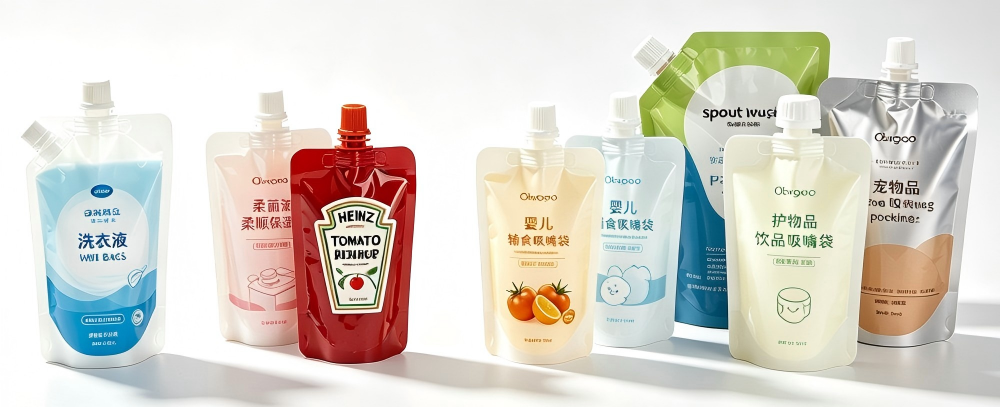
Spout Pouch Filling
On a spout pouch line, most leaks and most downtime happen at the fitment, not in the pouch body. I have spent enough commissioning weeks watching teams chase a filling problem that turned out to be a weld channel at the spout flange, or a cap seated half a thread high, that I now start every audit at the spout and work outward. The laminate is a mature, well-controlled input. The spout, the weld that holds it and the cap that closes it are where the process window is narrowest, and where a 0.3 second change in dwell quietly becomes a 1% leak rate three days later.
Spout Pouch Filling
A preformed pouch arrives with the fitment already welded in, or the machine inserts and welds it in line. Either way, four choices drive everything downstream.
| Element | Options | What it changes on the line |
|---|---|---|
| Position | Corner spout at 45°, or top spout, centred or offset | Corner spouts pour better and suit stand-up formats; top spouts take wider caps and sports closures and run faster |
| Spout body material | HDPE, or PP homopolymer or random copolymer | HDPE seals at lower temperature and suits mono-PE; PP survives hot fill and retort and anchors mono-PP |
| Cap type | Screw, sports push-pull, straw-piercing, tamper-evident ring, child-resistant | Cap height and geometry set the chuck, bowl and chute; child-resistant designs need a much tighter torque window |
| Weld method | Impulse, ultrasonic, or continuous thermal | Thermal gives the widest window on thick laminates; ultrasonic is fast and clean but unforgiving on film variation |
The seal layer has to match the spout material or you will never get a homogeneous weld: a PP seal layer for PP spouts, a PE seal layer for HDPE. On thermal welding I work at roughly 150–185 °C at the jaw, 0.5–1.2 seconds dwell and 0.2–0.5 MPa jaw pressure, then validate by peel and burst rather than by eye. The geometry point that catches people out is the flange radius. The weld has to bridge the transition where flat film meets the curved spout flange, and that is exactly where a channel leak forms. If leaks cluster at two symmetric points on the spout, I check jaw parallelism and the flange radii before I touch temperature.
Viscosity sets the filler, the valve and the nozzle, and it moves with temperature, so I ask for the figure at fill temperature rather than at ambient.
| Product class | Viscosity at fill temp | Filler | Watch-outs |
|---|---|---|---|
| Juice, water-like drinks, concentrates | 1–50 mPa·s | Mass flowmeter or servo piston | Foaming; use a bottom-up nozzle and a defoaming dwell |
| Edible oil, liquid detergent, shampoo refill | 50–800 mPa·s | Servo piston or gear pump | Surfactant foam needs a suck-back cut-off or the cap seat gets contaminated |
| Date syrup, honey, condensed milk | 1,000–12,000 mPa·s | Servo piston, jacketed hopper at 40–60 °C | Stringing at the nozzle; temperature drift beats piston tolerance |
| Paste, tomato concentrate, puree | 10,000–50,000 mPa·s | Large-port piston with rotary valve | Air entrainment gives headspace variation and false leak readings |
| Fibre or particulates | Any of the above | Piston with rotary valve, port at least 3× the largest particle | A particle caught in the thread or weld area is a guaranteed leaker |
Thermal process comes next and it sets the laminate. Hot fill at 85–92 °C with a hold and cool tunnel suits PET/PE or PP-based structures and gives ambient shelf life for high-acid products. Retort at around 121 °C demands a PP outer and seal layer, normally with an aluminium foil barrier, and the structure has to survive the pressure differential without delaminating. Aseptic filling into a pre-sterilised pouch is a different machine class again: sterile product path, pouch sterilisation, and a controlled environment around filling and capping.
Torque is where most spout pouch complaints are generated. Removal torque relaxes: a cap applied at 1.6 N·m commonly reads 20–35% lower after 24 hours as the material creeps, so I specify an application window and a minimum removal torque measured at 24 hours and again at end of shelf life.
| Spout / cap diameter | Application torque | Min. removal at 24 h | Monitoring |
|---|---|---|---|
| 8–10 mm straw spout | 0.4–0.7 N·m | 0.25 N·m | Servo head, 100% torque capture |
| 16 mm standard screw spout | 1.2–1.8 N·m | 0.80 N·m | Torque plus cap-height check for cross-threading |
| 22 mm sports push-pull | 1.8–2.6 N·m | 1.00 N·m | Torque plus vision on the tamper band |
| 28–33 mm wide mouth or child-resistant | 2.2–3.4 N·m | 1.40 N·m | Torque, band integrity, height check to prove seating |
Cross-threading is the failure I chase hardest, because a cap that goes on at an angle passes a torque check and still leaks. Catching it needs two signals, not one: measured torque plus a cap height or cap-to-shoulder gap. Anything outside the window is rejected and counted, because a rising cross-thread rate usually means a worn chute or an overfilled spout bowl.
Vacuum decay is the workhorse: draw a differential, typically 250–450 mbar depending on pouch size and headspace, hold, and measure the rise. A well-set system reliably finds defects around 20–30 µm. Pressure decay suits more rigid formats. Off line I use seal strength to ASTM F88, internal pressure resistance to ASTM F1140, and bubble emission to ASTM D3078 to locate a suspected leak. Inline I specify 100% vacuum decay on retorted or aseptic product, and AQL sampling under ISO 2859-1 for ambient hot-filled work.
Recyclability has moved from a marketing line to a purchasing requirement in Europe. The traditional multi-layer aluminium structure gives excellent barrier but sits poorly in current recycling streams, so most enquiries I handle now specify mono-material: an all-PP pouch with PP spout and cap, or all-PE with an HDPE spout, using a thin barrier coating instead of foil. The engineering cost is real. The seal window narrows and transmission rates are worse than foil, so shelf life has to be re-validated rather than assumed. The Packaging and Packaging Waste Regulation has also pushed recycled content and cap attachment up the agenda, and I now expect the tethered-cap question on any beverage-format spouted pouch, even where the requirement was written with PET bottles in mind.
A rotary preformed machine runs a fixed sequence: pouch magazine and pick, coding, pouch opening, optional in-line spout insertion and welding, filling, headspace flush or nitrogen dosing, cap placement and capping, torque verification, then discharge. Single filling on 200–500 ml formats runs at roughly 40–80 pouches per minute; twin filling takes small volumes to 80–140 per minute; 1-litre formats settle back to 25–40 per minute because of fill and settle time rather than machine speed.
CIP matters more than buyers expect. A product path that is not CIP-capable costs an hour a day in strip-down and will not hold a hygiene audit. I ask for a fully drainable path with no dead legs, a return loop reaching 1.5–2.0 m/s, and a validated cycle using 1.5–2% caustic at 70–80 °C followed by an acid step and final rinse. Change parts per pouch size are the recurring cost nobody budgets: magazine, gripper set, filling nozzle, plus a bowl, chute and chuck set on the spout side. Buy two sets for the volume format.
A packer filling date syrup into 500 ml and 1-litre stand-up pouches with a 16 mm corner spout and a tamper-evident screw cap, targeting 60 pouches per minute on the 500 ml format, called us in at 46 pouches per minute and a 1.4% leak rate. Viscosity was around 4,500 mPa·s at 45 °C and the plant filled hot at 78 °C. What failed first was cap-side: in 44 °C ambient the syrup cooled at the nozzle between cycles, strung, and left a film on the spout thread and sealing face, so caps cross-threaded and seated high. Alongside that, the fitment weld was short on dwell, and leaks appeared at two symmetric points on the flange radii three days after filling.
Four changes, in order of effect. A jacketed hopper and heated product path held syrup at 55 °C to the nozzle and the piston got a suck-back cut-off, which ended the stringing. Weld dwell went from 0.6 to 0.9 seconds with slightly higher jaw pressure and the jaws re-parallelised. Cap handling was rebuilt around a new chute and a servo head with torque capture plus a cap-height check. Finally, 100% vacuum decay at 350 mbar went in before discharge. Over four weeks: leak rate fell from 1.4% to 0.12%, speed rose from 46 to 62 pouches per minute, cap-related stoppages dropped from about 18 per shift to 2, and OEE moved from 54% to 71%. The plant also needed chilled water for weld cooling and derated drives in the cabinet, standard for Gulf ambient but missed in the original specification. A Southeast Asian liquid detergent refill packer on the same platform showed the same pattern in a different order: foaming first, then cap-seat contamination, then torque.
Can one machine fill both water-thin juice and a thick paste?
The piston can cover a wide range, but nozzle, valve and hopper are product-specific. Plan a change-part set per viscosity class, and expect 40–60% of the juice speed on paste.
Hot fill, pasteurisation or retort: how do I choose?
Start from product pH and required shelf life. High-acid products at hot fill temperature with a hold and cool tunnel are the cheapest route. Low-acid ambient products need retort near 121 °C or aseptic filling, and both change the laminate and the machine class.
What torque should I specify?
An application window plus a minimum removal torque at 24 hours, as tabulated above. If a supplier quotes only an application figure, ask what removal torque looks like after a day and at end of shelf life.
How do I test for leaks without slowing the line?
Inline vacuum decay at 250–450 mbar runs at full line speed and finds defects around 20–30 µm. Use bubble testing off line to diagnose where a leak is, not to inspect production.
Is a mono-material pouch worth the barrier penalty?
For EU retail it increasingly is not optional. Budget for shelf-life re-validation, since transmission rates will be worse than the foil structure you replace, and specify all-PP or all-PE including spout and cap, not just the film.
What utilities should I plan for?
Compressed air at 6 bar, chilled water in hot climates, three-phase power to local standard, and a CIP set with caustic and acid dosing. Across the Gulf and much of Southeast Asia, assume 220–240 V at 50 Hz and 40–45 °C ambient unless told otherwise.
Written by Helen Xu | Chief Industrial Application Engineer
Helen Xu is a Chief Industrial Application Engineer with 9 years of specialized experience in packaging machinery and liquid filling machine design, equipment model selection, and full production line process optimization. He focuses on delivering customized packaging & filling solutions for pharmaceutical, food, and chemical manufacturing industries, with mature practical expertise in GMP compliance, ISO 9001 quality management standards, and turnkey large-scale filling & packaging production line integration.
E-mail Us
Chat With Us
