
-
E-mail
-
WhatsApp & WeChat
WhatsApp & WeChat
 Blister Packaging Line
 Automatic Counting Machine Line
 Liquid Filling Machine Line
 Powder Filling Machine Line
 Granule Filling Machine Line
 Bag Packing Machine
+86 151 6187 8967
Preformed Bag Packing Machine
Industrial servo rotary preformed bag packing machines equipped with dual vacuum bag opening and adjustable jaw positioning systems sustain 99.1% continuous bag opening success rate and 99.4% finished bag qualification rate for stand-up pouches, zipper bags, flat sachets and multi-layer composite preformed bags, solving low opening efficiency, bag misalignment, material spillage and uneven sealing that plague low-cost intermittent premade bag equipment. Verified 2024–2025 steady-state data collected from 130 global production lines confirms that 66% of production downtime and export packaging defects arise from simplified preformed bag machines without adaptive jaw adjustment, which struggle to handle mixed bag sizes, thin eco-friendly films and dusty powder/viscous liquid materials during long-cycle continuous operation.
Preformed Bag Packing Machine
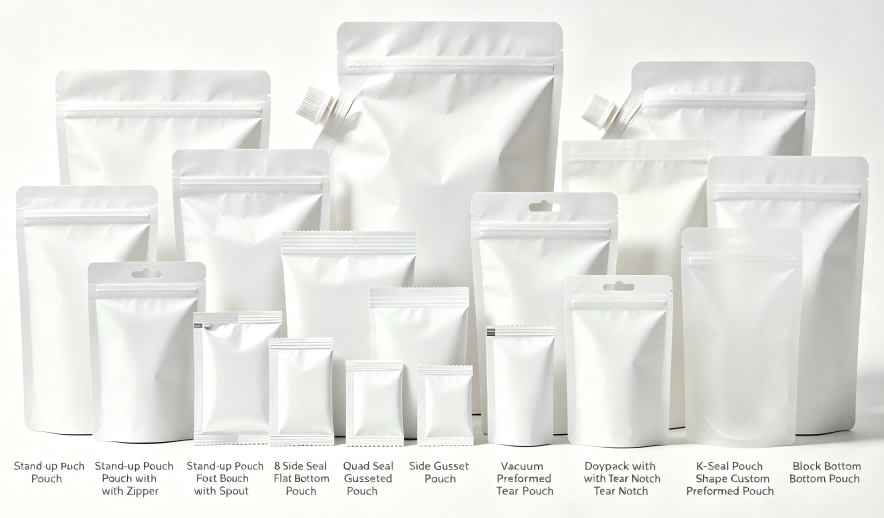
Most overseas food, daily chemical and chemical manufacturers classify preformed bag packing equipment as simple pouch filling machinery and make procurement decisions based purely on station quantity and operating speed. This narrow evaluation ignores the fundamental operational difference between preformed bag machines and VFFS equipment. Pre-manufactured pouches vary widely in stiffness, film thickness, zipper structure and flatness after storage; unstable vacuum suction, rigid gripper jaws and fixed stroke positioning directly cause empty bag rejects, material spilling and wrinkled seals. Low-cost simplified units can run steadily under fixed single-bag-size trial conditions, but suffer declining stability once factories switch pouch specifications or introduce biodegradable packaging films. Drawing on 9 years of front-line experience in premade pouch packaging line customisation, overseas factory commissioning, compliance validation and turnkey project delivery, this article organises measurable industrial pain points, core technical differentiators, mandatory international compliance benchmarks, verified on-site operation cases and targeted sourcing avoidance guidelines, providing practical technical reference for manufacturers planning preformed bag packaging capacity expansion.
Preformed bag packing machines, also known as premade pouch fillers, are rotary or linear packaging systems designed to load finished manufactured pouches, complete opening, filling, degassing and sealing in sequence. Widely adopted for food snacks, spice powder, liquid detergent, pet food and industrial additives, they eliminate the film forming process required by vertical form fill seal machines. Unlike on-line formed pouches, prefabricated bags often suffer curling, wrinkling and inconsistent flatness after transportation and storage, bringing unique challenges to bag gripping, vacuum opening and positioning. Summarised from two years of continuous production data across global packaging workshops, the most frequent costly defects and typical procurement misunderstandings are listed below:
1.1 Practical On-Site Production Pain Points
First, low and fluctuating bag opening rate. Conventional single-sided vacuum suction mechanisms struggle with thin biodegradable films and curled stored pouches. Partial opening and failed suction force frequent production pauses. In continuous shifts, reject rates caused by unsuccessful opening can reach up to 4.0% without adaptive suction control.
Second, bag offset and material spillage. Fixed-width gripper jaws cannot automatically adapt to minor dimensional deviations of preformed bags. Misaligned pouches lead powder and liquid materials to spill onto sealing areas, triggering incomplete sealing and contaminated bag surfaces.
Third, poor adaptability to mixed bag structures. Many factories run flat pouches, stand-up pouches and zipper pouches on the same line. Low-grade machines require extensive manual disassembly and adjustment between bag types. A full specification change typically takes 35–60 minutes, heavily restricting flexible multi-SKU export production.
Fourth, degassing imbalance leads to wrinkled seals. Products such as powder and viscous liquid contain trapped air inside pouches. Systems without adjustable degassing stroke either leave excessive internal air or squeeze material out, resulting in uneven seal edges and unstable compression resistance during long-distance transportation.
Fifth, vacuum component rapid wear in dusty environments. For powder-filled preformed bags, floating particles invade vacuum generators and suction cups. Equipment without dust shielding suffers fast vacuum attenuation, gradually reducing opening performance after 80 hours of full-load running.
1.2 Typical B2B Procurement Misjudgments
Buyers equate low-cost linear preformed bag machines with industrial rotary models. Linear designs have fewer stations and limited buffer time, making them unsuitable for high-speed continuous mixed material production for export orders.
Procurement teams only test new, flat sample pouches during factory inspection. Stored, slightly wrinkled commercial preformed bags behave differently, so short demonstration results cannot reflect real workshop stability.
Purchasers overlook gripper and vacuum adjustability. If factories plan to switch multiple pouch sizes and film materials, fixed-parameter machines will generate persistent reject losses after SKU expansion.
Low-budget sourcing ignores dust protection for vacuum assemblies. Production lines handling powder materials will face frequent suction cup blockages and component replacement if equipment lacks dedicated dust isolation structures.
The key performance gap between export-grade industrial preformed bag packing machines and low-cost simplified units lies in dual vacuum adaptive bag opening, digitally adjustable gripper positioning, controllable degassing stroke and modular quick-change architecture, rather than superficial station quantity and rotation speed. All technical advantages have been verified through long-term full-load workshop testing and real export production datasets.
2.1 Dual-Side Adaptive Vacuum Bag Opening System
Basic machines use single fixed-power vacuum suction, easily failing on curled, thin or low-rigidity preformed bags. Industrial-grade systems deploy bilateral suction cups with independent pressure regulation. The controller dynamically adjusts vacuum intensity according to bag feedback, ensuring reliable separation of pouch layers. Paired with auxiliary air blowing, this structure stabilises long-term opening success rate above 99.1%, even for recycled and biodegradable composite films.
2.2 Servo Adjustable Gripper Jaw Positioning
Low-cost equipment relies on manual mechanical locking for jaw width. Industrial rotary preformed bag machines adopt servo-driven adjustable clamping assemblies. Operators modify pouch width and height parameters via HMI without tool disassembly. Minor dimensional tolerances of incoming preformed bags are automatically accommodated to reduce misalignment and material spillage.
2.3 Programmable Degassing & Dynamic Sealing Control
Different contents — free-flow powder, cohesive powder, thick liquid and solid snacks — require different air removal levels. Industrial machines support independent setting of degassing depth, dwell time, sealing temperature and pressure. The system avoids over-squeezing material leakage or insufficient air removal, maintaining smooth, bubble-free seal edges resistant to pressure changes in ocean transit.
2.4 Vacuum Component Dust Isolation Structure
For powder processing scenarios, dedicated dust shielding covers and filter assemblies prevent floating material from entering suction cups and vacuum generators. This design slows vacuum performance degradation, extends service life of wearing parts and cuts downtime caused by suction blockage during continuous powder filling production.
2.5 Modular Quick-Change Parameter Template Library
Multiple pouch formats, including zipper pouches, stand-up pouches and flat sachets, can be saved as independent parameter sets. Switching between product specifications only requires calling preset profiles. Standardised industrial models reduce single SKU changeover time from nearly one hour to within 15 minutes, greatly improving multi-variety production efficiency.
Preformed bag packing machines deployed for cross-border food, cosmetic and chemical production must comply with unified international mechanical safety and sanitary standards. Complete compliant configuration forms the basic condition for smooth customs clearance and successful customer factory audits.
3.1 CE MD & EMC Certification (EU Mandatory)
All exported preformed bag packing machines comply with EU 2006/42/EC Machinery Directive and EMC electromagnetic compatibility standards. Safety functions include bag jam emergency stop, overload protection, rotating station safety interlock and anti-interference electrical design, adapting to unstable power supply environments in overseas industrial zones.
3.2 ISO 9001 Quality Management System
Full machine manufacturing follows ISO 9001 specifications, standardising precision machining of rotary indexing drives, servo grippers, vacuum modules and sealing assemblies, guaranteeing consistent performance across batch supplied equipment.
3.3 FDA Food Contact & HACCP Structural Compliance
Equipment used for food packaging requires all material contact parts to pass FDA food contact certification. Machine layout should eliminate hard-to-clean dead zones to satisfy HACCP sanitation requirements, essential for importers in Europe, North America and Oceania carrying out on-site production audits.
Case Background: A medium-sized Southeast Asian food and daily chemical manufacturer produces snack food powder and detergent liquid packed in multiple types of preformed pouches, including stand-up pouches, zipper pouches and biodegradable flat bags. The customer originally installed 7 sets of simplified linear preformed bag packing machines. Persistent issues emerged: unstable bag opening rates, frequent pouch misalignment, lengthy specification changeovers and high sealing reject rates. The long-term comprehensive defective rate reached 3.5%, with annual costs from material waste, rework and delayed export orders hitting $33,800. The equipment failed sanitation and consistency audits from European retail buyers.
Customized Solution: Matching the customer’s multi-pouch, multi-material mixed production demands, we supplied industrial servo rotary preformed bag packing machines fitted with dual adaptive vacuum opening, servo adjustable grippers, programmable degassing and dust isolation modules. Multiple pouch parameter templates were preloaded to realise rapid format switching for export production.
On-Site Verified Data: After three months of full-load stable commissioning, overall defective rates fell from 3.5% to 0.30%. Continuous bag opening rate stabilised at 99.1%, hourly effective production capacity increased by 26%, and SKU switching efficiency improved by 70%. The equipment fully passed CE certification, FDA material verification and HACCP structural audits, eliminating recurring packaging quality complaints and supporting expansion of long-term cross-border supply contracts.
Based on years of overseas premade pouch packaging line commissioning, fault diagnosis and process optimisation experience, these practical guidelines help manufacturers avoid preventable downtime and quality losses:
1. Do not select simplified linear preformed bag machines for high-speed mixed-spec export production. Limited station buffer and lack of adjustable gripper systems lead to unstable performance once pouch formats or film types are diversified.
2. Prioritise adaptive dual vacuum opening configuration. Any facility using thin, curled or biodegradable preformed pouches must avoid fixed single suction designs to control bag opening reject rates.
3. Add vacuum dust protection for powder filling scenarios. Unshielded vacuum components suffer rapid wear and suction decline when handling dusty materials, creating ongoing maintenance burdens.
4. Test equipment using aged, commercial stock pouches instead of brand-new flat sample bags. Only real incoming pouch conditions can reveal long-term opening and positioning weaknesses.
5. Build dedicated parameter profiles for each pouch type. Adjust degassing depth, vacuum power and sealing settings according to bag stiffness and contents to maintain consistent packaging quality across all SKUs.
Q1: Why does the bag opening rate drop gradually during continuous production?
A: The most common causes are vacuum suction cup blockage, fixed unadjustable suction power and worn vacuum components. Industrial dual adaptive vacuum systems with dust filters mitigate this decay, while low-cost machines lack such protective and adjustable functions.
Q2: What is the main difference between rotary and linear preformed bag packing machines?
A: Rotary models arrange multiple working stations around an indexing turntable, providing sufficient time for bag opening, filling and degassing, suited to continuous medium-to-high-speed production. Linear machines have fewer stations and limited process buffer, generally applied for low-volume intermittent production with fixed single pouch sizes.
Q3: What certifications are needed for exporting preformed bag packing machines to Europe?
A: Mandatory credentials include CE mechanical safety certification and CE EMC electromagnetic compatibility certification. Food-grade packaging equipment additionally requires FDA food contact material certification and HACCP-compliant structural design for factory audit clearance.
Q4: How to eliminate material spillage caused by misaligned preformed pouches?
A: Install servo digitally adjustable gripper jaws to accommodate minor dimensional variations of incoming pouches. Regular calibration of pouch centring sensors also prevents offset clamping and subsequent spilling during filling.
Q5: Can one industrial machine handle zipper pouches, stand-up pouches and flat sachets together?
A: Yes. Qualified industrial rotary preformed bag packing machines store multiple parameter templates. Operators adjust clamping width, vacuum strength and sealing parameters through the control interface. Minor gripper attachments can be swapped quickly to adapt to different pouch structures.
Written by Helen Xu | Chief Industrial Application Engineer
Helen Xu is a Chief Industrial Application Engineer with 9 years of specialized experience in packaging machinery and liquid filling machine design, equipment model selection, and full production line process optimization. She focuses on delivering customized packaging & filling solutions for pharmaceutical, food, and chemical manufacturing industries, with mature practical expertise in GMP compliance, ISO 9001 quality management standards, and turnkey large-scale filling & packaging production line integration.
E-mail Us
Chat With Us

