
-
E-mail
-
WhatsApp & WeChat
WhatsApp & WeChat
 Blister Packaging Line
 Automatic Counting Machine Line
 Liquid Filling Machine Line
 Powder Filling Machine Line
 Granule Filling Machine Line
 Bag Packing Machine
+86 151 6187 8967
Pouch Machines
The right pouch machine is decided by seal-bar geometry and film structure, not by catalog speed claims: for aluminum-laminate pharmaceutical stick packs you should run a VFFS with independent dual-zone jaw temperature control, while high-volume flat or stand-up food pouches with premade geometry favor HFFS or a premade-pouch platform. Choosing on cycle rate alone typically produces seal leaks, film waste above 8%, and a validation file that does not survive an EU GMP Annex 1 inspection.
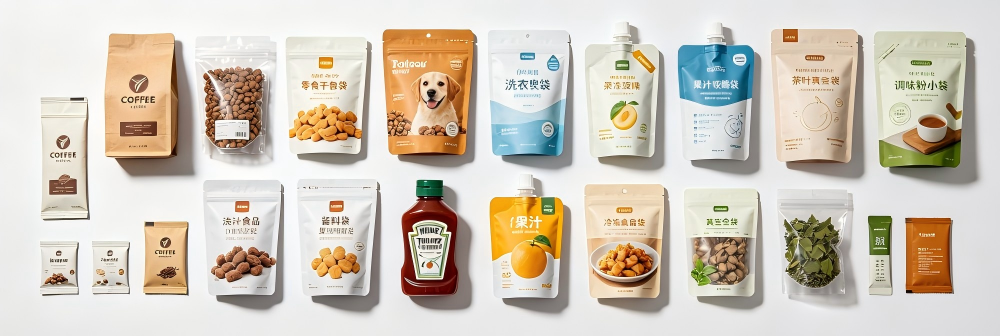
Pouch Machines
The table below compares the three pouch architectures I commission most often. The numbers are from installed lines, not vendor brochures.
| Parameter | VFFS (form-fill-seal) | HFFS (horizontal) | Premade Pouch |
|---|---|---|---|
| Film format | Roll stock, formed in-line | Roll stock, pillow/flat | Pre-sealed empty pouch |
| Seal type | Fin / lap back seal + 2 transverse | 3-side or 4-side | 1 transverse (top), pre-sealed rest |
| Speed (pouches/min) | 40–120 (stick); 30–70 (flat) | 60–200 | 30–80 |
| Format changeover time | 25–45 min | 35–60 min | 15–30 min |
| Cleanroom suitability | Good, compact footprint | Moderate, wider envelope | Best for ISO 8/C-grade |
| CAPEX (USD, 2024) | 90k–220k | 180k–450k | 120k–300k |
VFFS wins on material cost because you buy roll stock instead of finished pouches — a 12 µm PET / 9 µm Al / 60 µm PE laminate runs roughly 0.013 USD per stick versus 0.021 USD for a premade equivalent. HFFS wins on throughput for free-flowing granules where a flat pillow pack is acceptable. Premade platforms win where a complex stand-up or spouted geometry is non-negotiable and volumes are below 80 pouches/min.
The single most abused number in pouch-machine sales is "seal strength." What matters is the measured peel/rupture value in N/15 mm and the standard used to cut the sample. I run ASTM F88 for seal strength and ASTM D3999 for burst when qualifying a line.
| Film structure | Jaw temp (°C) | Seal strength (N/15 mm) | Reject rate |
|---|---|---|---|
| PET 12 / PE 70 (mono-lam) | 150 | 18–22 | 0.4% |
| PET 12 / Al 9 / PE 60 | 160/140 dual-zone | 24–28 | 0.6% |
| BOPP 20 / CPP 40 | 135 | 14–17 | 0.9% |
Aluminum laminate requires a hotter inner sealant layer but the aluminum itself conducts heat away from the seal face, so a single-zone jaw undershoots the PE and the bond forms at 11–13 N/15 mm — below the 18 N/15 mm I hold as a pharmaceutical floor. The dual-zone fix adds a second heater and thermocouple on the outer bar; cost is about 3.5k USD per jaw but it is the difference between a passing and failing dossier.
| Machine | Nominal speed | Actual /min (3-shift) | Film waste % |
|---|---|---|---|
| VFFS stick, 4-lane | 480 | 410 | 3.1% |
| HFFS flat, 2-lane | 200 | 178 | 2.4% |
| Premade, rotary 8-station | 80 | 71 | 1.1% |
Film waste is dominated by startup scrap during thermal stabilization — the first 40–60 pouches after a jaw cold-start are culled. Premade lines waste less because the pouch is already formed; VFFS lines should budget 3–4% into the cost model or the payback math collapses.
Compliance is not a single checkbox. The same machine selling into Stuttgart and Riyadh carries different validation obligations, and the buyer's QA team is usually the one who pays for the gap.
Adoption of the 2022 revision tightened the bar on visible and invisible particle control. For laminate stick packs used with primary-dose powders, Annex 1 expects documented environmental monitoring at the filling zone and a PQ that demonstrates seal integrity at the rated speed, not at a slowed demonstration rate. A hold-time study on the open-pouch exposure window is now routinely requested by EU auditors.
Subpart F (production & process controls) is where pouch sealing lands. §211.110 requires in-process controls for critical parameters — jaw temperature, dwell, and seal pressure must be recorded per batch, not per shift. A printed chart recorder is no longer sufficient; an electronic batch record with alarm limits at ±3 °C is what I see FDA inspectors accept.
Thailand FDA aligns loosely with PIC/S GMP, and BPOM Indonesia runs its own CPOB (Cara Pembuatan Obat yang Baik). Both accept ISO 15378 as the primary packaging-material standard but expect the dossier in the local language for the seal-specification section. I have seen lines rejected for submitting only an English seal-validation report.
Saudi SFDA references GMP 2007 with frequent nods to EU practice; UAE MOHAP requires product registration before line samples are accepted. Humidity control is the practical differentiator here — Gulf sites run 45–60% RH ambient, and your seal qualification must be performed at that RH band or the SFDA reviewer will request a re-run.
Location: Jakarta, Indonesia.
Product: Oral powder stick pouch, paracetamol + ibuprofen combination, 3 g net.
Problem: Seal leaks at 6.8% reject during the wet season; line ran at 75% RH ambient.
Root cause: Single-zone jaw set at 150 °C was adequate for the earlier BOPP job but the new PET/Al/PE laminate needed independent control; the aluminum pulled heat and peel strength measured 12 N/15 mm.
Fix: Retrofitted dual-zone jaws with independent thermocouples set at 160 °C (inner) / 140 °C (outer), added a dehumidified collar cabinet at 35% RH, and an inline vacuum-decay IPC on 1 in 50.
Result: Seal strength rose to 26 N/15 mm, reject rate fell to 0.5%, and the BPOM dossier passed on first submission.
Location: Binh Duong, Vietnam.
Product: Chili sauce 4-side-seal pouch, 50 g.
Problem: Bridging in the hopper caused fill-weight variation of ±1.4 g against a ±0.5 g spec.
Root cause: High-viscosity sauce with particulates stalled at the conical hopper wall; no agitation at the throat.
Fix: Installed a slow-speed paddle agitator (22 rpm) with scraper blades and a wider 75 mm throat; re-tuned the volumetric cup fill.
Result: Fill variation narrowed to ±0.3 g, throughput held at 95 pouches/min, scrap dropped from 4.2% to 1.8%.
Q1: Which film is compatible with a VFFS for a moisture-sensitive pharma powder?
A: Use a high-barrier laminate — PET 12 / Al 9 / PE 60 or a foil-replace metallized structure. Mono PE will not hold the water-vapor transmission rate a 24-month shelf life demands; we measure WVTR below 0.05 g/m²/day only with the aluminum layer.
Q2: What seal test method do auditors accept?
A: Combine ASTM F88 seal-strength (destructive, per lot) with an inline non-destructive vacuum-decay or dye-penetration check (per shift). Keep both in the batch record.
Q3: How long is a realistic format changeover?
A: 25–45 minutes on VFFS if you pre-stage the collar and former; budget another 20 minutes for thermal stabilization scrap.
Q4: Stick vs sachet — when does each make sense?
A: Stick for single-dose powders where the narrow format improves pour accuracy and fits a small palm; sachet (flat) for granules and samples where width is not constrained. Stick tooling costs about 30% more.
Q5: Can a VFFS run inside a cleanroom?
A: Yes, with a stainless 316L frame, servo rather than pneumatic drives where possible to cut particle generation, and the dehumidified collar cabinet. It suits ISO 8 / C-grade without issue.
Q6: What CAPEX should I budget for a compliant line?
A: VFFS stick line 90k–220k USD; add 15–25k for IPC, dehumidification, and the electronic batch record link the dossier will require.
Written by Helen Xu | Chief Industrial Application Engineer
Helen Xu is a Chief Industrial Application Engineer with 9 years of specialized experience in packaging machinery and liquid filling machine design, equipment model selection, and full production line process optimization. He focuses on delivering customized packaging & filling solutions for pharmaceutical, food, and chemical manufacturing industries, with mature practical expertise in GMP compliance, ISO 9001 quality management standards, and turnkey large-scale filling & packaging production line integration.
E-mail Us
Chat With Us


