
-
E-mail
-
WhatsApp & WeChat
WhatsApp & WeChat
 Blister Packaging Line
 Automatic Counting Machine Line
 Liquid Filling Machine Line
 Powder Filling Machine Line
 Granule Filling Machine Line
 Bag Packing Machine
+86 151 6187 8967
Pouch Machine
If you are buying a rotary premade pouch machine for stand-up Doypacks, the spec that actually protects your OEE is not the sealing jaw temperature — it is the reliability of pouch pick-and-place from the magazine and the grip-station transfer through each rotary index, because that is where I watch lines lose 15–20% of their theoretical throughput before the product ever reaches the zipper. The filler and the sealer are the easy parts to quote; the handling is where the real engineering lives.
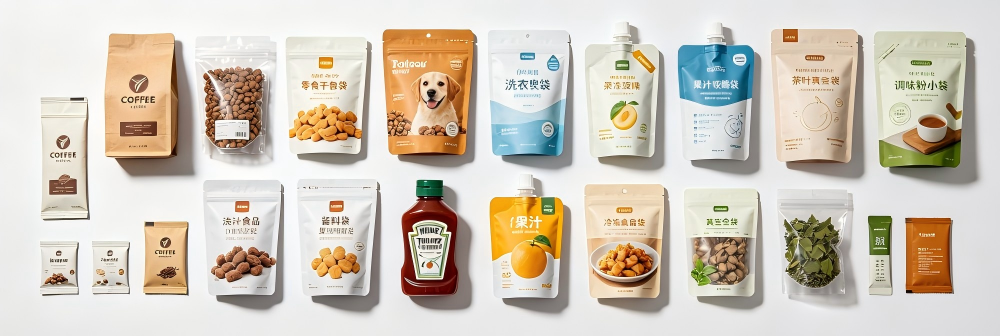
Pouch Machine
A rotary premade pouch system is a transfer machine first and a packaging machine second. It picks a flat pouch from a magazine, opens it, fills it, seals it, and drops it — all at discrete stations around a rotating turret. Every pouch is a separate pre-made object with its own wrinkles, static charge, and dimensional tolerance, and the machine has to handle thousands of them an hour without double-feeding or dropping one into the gears.
The pain arrives as intermittent misfeeds that QA cannot see and maintenance cannot reproduce on demand. You get a 2% reject rate that nobody owns, because the machine "runs fine when the technician is watching." The truth is the failure is statistical, driven by laminate stack behavior and vacuum-cup aging, and a statistical problem needs a statistical fix, not a finger-point.
People lump "pouch machines" together, but the premade rotary and the form-fill-seal (FFS) machine are different animals with different failure modes. Even within rotary premade, the indexing mechanism and the station count matter more than the brochure headline. Below is the comparison I use when a buyer says "just give me a pouch machine."
| Parameter | 8-station rotary, vacuum pick | 6-station rotary, suction + gripper | Inline intermittent FFS |
|---|---|---|---|
| Pouch source | Pre-made Doypack | Pre-made Doypack | Film roll, formed on line |
| Typical speed | 40–70 pouches/min | 30–55 pouches/min | 60–120 pouches/min |
| Misfeed driver | Magazine + vacuum | Gripper wear | Film registration |
| Zipper handling | Integrated, pre-open | Manual pre-open | Not applicable |
| Changeover time | 20–35 min | 25–45 min | 15–30 min |
| Best for | Premium, zipper, gusset | Simple flat pouches | High-volume single SKU |
The 8-station rotary with vacuum pick is what I spec for zipper stand-up pouches because the extra stations give you a dedicated pre-opening and a dedicated zipper-press station without starving the fill. The gripper version is cheaper but the mechanical fingers wear and start dropping pouches at the grip station — a failure mode vacuum pick avoids, at the cost of cup maintenance.
The numbers below came off a commissioning I ran on a nutraceutical protein line. They are from the line's own rejection counter and the seal tester, not a quotation.
Location / product: Lyon, France. A nutraceutical manufacturer running 500 g vanilla protein powder in 180 × 260 mm premade Doypack with a press-to-close zipper.
Throughput: ~45 pouches/min on an 8-station rotary, target 500 g dose via auger filler mounted above station 4.
Working conditions: Climate-controlled hall at 21 °C, 45% RH. Laminate was a PET/AL/PE 110 µm structure with a high-surface-energy print lacquer.
The problem: Misfeed and double-pick at the magazine ran at 2.1% of all cycles — roughly one bad pick every 47 seconds. At 45 pouches/min that is about 57 lost or jammed pouches per hour, plus the operator babysitting the magazine.
Root cause: Two issues stacked. The silicone vacuum cups had hardened after ~180,000 cycles and the vacuum margin thinned to the point where a slightly curled pouch lip slipped. On top of that, the printed laminate stack carried a static charge of ~8 kV at the magazine, so pouches clung in pairs and the picker grabbed two at once.
The fix: We installed a pulsed air ionizer bar across the magazine exit and added per-cup vacuum sensors with a reject-at-station-2 logic so a weak pick was caught before fill. Cup replacement interval was set to 120,000 cycles regardless of visual condition.
The result: Misfeed dropped to 0.3% — about one event per 5.5 hours — and the operator was reassigned from magazine babysitting to QA sampling. Zipper seal strength held at 38 N/15mm after the fix, unchanged from the good pouches.
| Metric | Before fix | After fix |
|---|---|---|
| Magazine misfeed / double-pick | 2.1% | 0.3% |
| Static at magazine surface | ~8 kV | <1 kV |
| Station 2 dwell time | 0.85 s | 0.82 s |
| Zipper seal strength | 37 N/15mm | 38 N/15mm |
| Effective OEE (handling) | 81% | 96% |
The lesson is pragmatic: the seal was never the problem, the handling was, and handling problems hide behind "operator error" until you instrument the magazine.
For a nutraceutical line in the EU, the machine itself must carry a CE mark under the Machinery Directive 2006/42/EC, with the rotary turret guarded to PLd per EN ISO 13849-1 and an accessible emergency-stop architecture. On top of that, EU GMP expectations for nutraceuticals push hygienic design at the fill and seal stations — 316L contact parts, no dead pockets where powder accumulates. The zipper pre-open station must be cleanable because it sits upstream of the sealed environment.
While many nutraceuticals fall under DSHEA rather than strict drug GMP, a contract manufacturer supplying both markets should build to 21 CFR Part 110 (current good manufacturing practice for food) and, where the product is structure/function claimed, keep batch records defensible. If the pouch line also runs a drug-product SKU, 21 CFR Part 211 subpart E on equipment cleaning applies, and the grip and magazine must be in the validated cleaning scope because powder transfers there during handling.
In markets like Vietnam, Thailand, and Indonesia, the machinery is usually accepted against the importer's factory license, but the laminate and zipper must meet local food-contact rules. I make sure the pouch material certificate travels with the machine dossier. For halal-export plants, the handling surfaces must be cleanable to a halal-compliant protocol, and the ionizer air must be filtered oil-free so it doesn't contaminate the pouch interior during pre-opening.
Saudi SFDA and UAE MOHAP expect GCC-standard labeling and shelf-stable seals; the zipper seal strength of 35–40 N/15mm I measured is the kind of number their labs probe on import. The machine should be capable of a sealed-pouch leak test (typically <0.5 mbar/min bubble or vacuum-decay) as part of the line, because a weak zipper means product returns in the heat.
| Item to pin down | Why it matters |
|---|---|
| Station count and index type | More stations = room for pre-open + zipper press |
| Magazine capacity at target speed | Determines topping-up labor and misfeed |
| Per-cup vacuum sensing | Stops silent drops and jams |
| Zipper pre-open method | Prevents closed-zipper fills |
| Gusset grip profile | Stand-up bottom integrity |
| Static control provision | Prevents double-pick on gloss film |
| CE / PLd safety architecture | Legal to operate in EU |
If your brand needs a sturdy stand-up Doypack with a press-to-close zipper and a high-quality pre-printed look, premade is the right call — FFS can't give you that zipper quality or the rigid gusset. FFS wins only on raw speed for a single high-volume SKU on rollstock.
Reliability is a function of the pre-open station and the zipper-press dwell, not the zipper itself. With a vacuum wedge pre-open and a dedicated press at 0.6–0.9 s dwell, I hold 35–40 N/15mm seal strength and near-zero closed-zipper defects. Without pre-open, you will see trapped-powder failures.
A well-tooled 8-station rotary typically spans 90–230 mm width and 130–320 mm height without a mechanical rebuild, but the magazine and gripper fingers need swapping between wide bands. Confirm the actual band, not the marketing "up to" number.
Budget 25–40 minutes for a width change that swaps magazine and grip fingers, plus 10 minutes of empty-run verification. Anyone quoting under 15 minutes is excluding the grip retooling, which is exactly where changeover time hides.
Yes, with an auger filler mounted over the fill station and a check-weigher downstream. For a 500 g protein dose I hold ±1.2% CV. The pouch machine's job is to present a stable, open pouch at the fill station — if it wobbles, the dose suffers, so grip stability matters as much as the filler.
Magazine feeding and grip transfer, by a wide margin. The sealer and filler are predictable; the handling is stochastic. Instrument the magazine with vacuum sensing and static control and you recover most of the lost 15%.
On any glossy or metallized laminate, it is not optional — static of 5–10 kV will double-feed you within a shift. If your film is matte LDPE you can risk it, but I still spec it because film changes mid-life and you don't want to re-buy the machine.
Written by Helen Xu | Chief Industrial Application Engineer
Helen Xu is a Chief Industrial Application Engineer with 9 years of specialized experience in packaging machinery and liquid filling machine design, equipment model selection, and full production line process optimization. He focuses on delivering customized packaging & filling solutions for pharmaceutical, food, and chemical manufacturing industries, with mature practical expertise in GMP compliance, ISO 9001 quality management standards, and turnkey large-scale filling & packaging production line integration.
E-mail Us
Chat With Us


