
-
E-mail
-
WhatsApp & WeChat
WhatsApp & WeChat
 Blister Packaging Line
 Automatic Counting Machine Line
 Liquid Filling Machine Line
 Powder Filling Machine Line
 Granule Filling Machine Line
 Bag Packing Machine
 Auxiliary Machine
+86 151 6187 8967
Pharma Packaging Machines
The mistake in specifying pharma packaging machines is buying one machine at a time. A compliant pharma line is a stack: primary pack (blister or bottle), secondary pack (carton), and a serialization/aggregation layer that ties them — and the integration between layers is where most validation time and cost live. Map the whole stack, then buy the nodes.
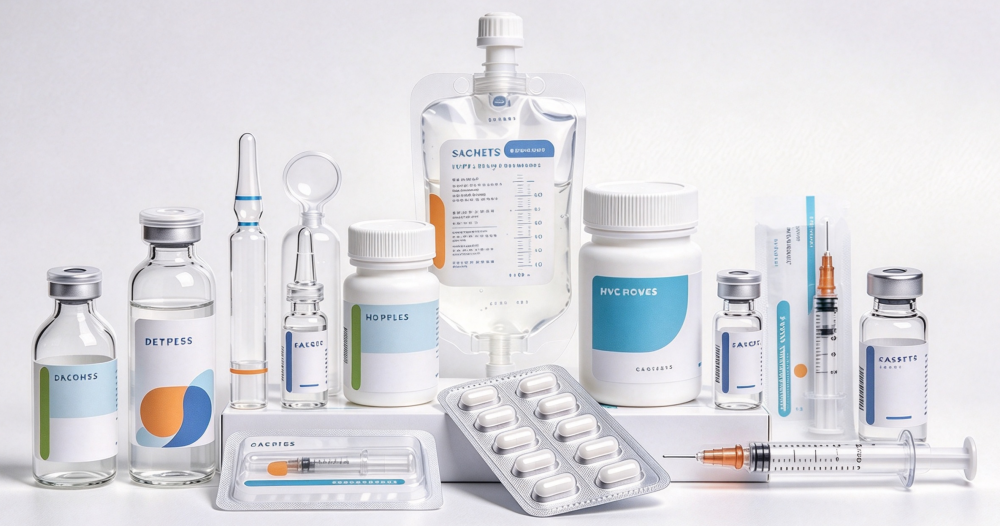
Pharma Packaging Machines
| Layer | Machine | Job | Compliance anchor |
|---|---|---|---|
| Primary | Blister / bottle filler / sachet | Dose + barrier | Annex 1, 21 CFR 211 |
| Secondary | Cartoner / case packer | Protect + inform | Label accuracy, tamper |
| Serialization | Coder + aggregator | Trace per pack | FMD / DSCSA |
Choose by molecule stability and regimen, not by habit. A moisture-sensitive 10-day course belongs in blister; a 90-day stable Rx belongs in bottle.
In the EU, FMD requires a unique serial on every saleable pack, verified at the carton and aggregated to the case. In the US, DSCSA requires similar traceability. The coder (inkjet/laser/TTO) and the aggregator (line controller talking to the national repository) must be in scope from day one — retrofitting serialization after validation is painful and expensive.
A Sofia pharma maker ran blister (80 blisters/min, 10 tablets) + offline cartoner + manual serial logging. Audit found serial mismatches (0.9%) and a 6-week validation backlog on new SKUs.
We integrated a cartoner inline with a TTO coder and an aggregation controller feeding the EU repository, plus vision verify at every reject gate. Outcome:
| Metric | Before | After |
|---|---|---|
| Serial mismatch | 0.9% | 0.02% |
| SKU validation time | 6 weeks | 9 days |
| Line OEE | 66% | 81% |
| Reject capture | Manual | Vision-logged |
Validation lead time: The integration and IQ/OQ/PQ on the serialization layer, not the blister speed, is usually what delays a launch. Scope it early.
EU GMP Annex 1, FMD serialization, 316L contact, IQ/OQ/PQ, and a validated seal/closure per USP <1207> analogues. CE machinery.
FDA 21 CFR 211, cGMP, DSCSA serialization, and closure validation. UL/NRTL electrical.
Growing serialization adoption; Halal where relevant. Humidity drives blister barrier choice.
GCC/SASO conformity, Arabic labeling, tamper-evident secondary. Cold-form for summer transit.
Moisture/tropical-sensitive or short-course → blister. Stable, high-count Rx → bottle with desiccant. Match to stability data.
EU (FMD) and US (DSCSA) yes for prescription. Many SEA/ME markets are moving that way; build it in to future-proof.
Because the integration and serial layer need IQ/OQ/PQ across every node. Scope the integrator and plan 2–6 weeks per SKU.
Technically yes, but you re-open validation on the whole line. Far cheaper to include it at purchase.
Written by Helen Xu | Chief Industrial Application Engineer
Helen Xu is a Chief Industrial Application Engineer with 9 years of specialized experience in packaging machinery and liquid filling machine design, equipment model selection, and full production line process optimization. He focuses on delivering customized packaging & filling solutions for pharmaceutical, food, and chemical manufacturing industries, with mature practical expertise in GMP compliance, ISO 9001 quality management standards, and turnkey large-scale filling & packaging production line integration.
E-mail Us
Chat With Us


