
-
E-mail
-
WhatsApp & WeChat
WhatsApp & WeChat
 Blister Packaging Line
 Automatic Counting Machine Line
 Liquid Filling Machine Line
 Powder Filling Machine Line
 Granule Filling Machine Line
 Bag Packing Machine
+86 151 6187 8967
Packaging Machine for Coffee
For roasted coffee the packaging machine is a stalemate with oxidation, and the machine wins only if it controls the gas — a coffee bag sealed at 3% residual oxygen stays fresh for months; the same roast sealed at 12% tastes stale in weeks regardless of how pretty the pouch is. Whole bean and ground coffee fail by different mechanisms, so the machine spec starts with the product's respiration, not the bag format.
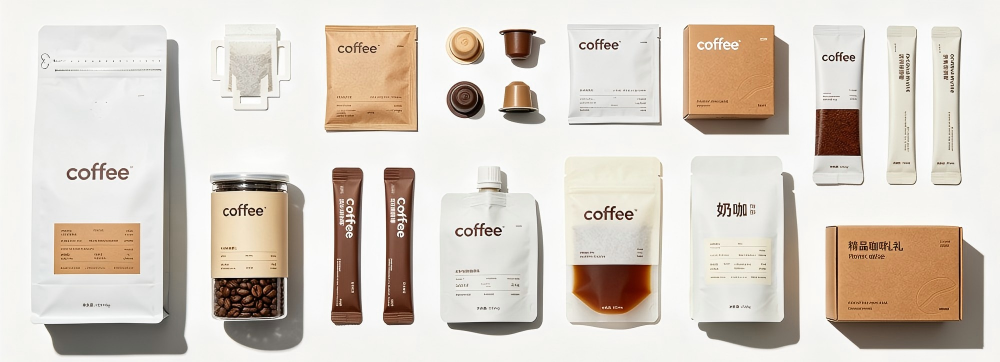
Packaging Machine for Coffee
Roasted beans off-gas CO₂ for 24–72 hours. Seal them airtight immediately and the bag balloons or bursts. The machine must either wait (static degas before pack) or pack with a one-way degassing valve and a gentle nitrogen blanket that does not trap pressure.
Grinding multiplies surface area ~1,000×, so oxygen uptake and aroma loss accelerate sharply. Ground needs aggressive MAP: multi-stage N₂ purge to pull residual O₂ under 2–3% inside a high-barrier laminate, then immediate hermetic seal.
| Property | Whole bean | Ground |
|---|---|---|
| Key enemy | CO₂ pressure + slow staling | Rapid O₂ uptake + aroma loss |
| Target residual O₂ | < 5% (valve handles rest) | < 2–3% (barrier dependent) |
| Machine need | Degas timing or valve applicator | Multi-stage N₂ flush + tight seal |
| Barrier film | PET/ALU/PE, medium | PET/ALU/PE, high (WVTR < 0.05) |
A packaging machine for coffee earns its name at the gas-flush station. The sequence that holds aroma:
The 2% rule we hold lines to: if a ground-coffee pouch leaves the machine above 3% residual O₂, treat it as a non-conformance, not a rounding error. Aroma volatiles are gone in the first 48 hours at that level, and the complaint arrives long after the lot shipped.
No flush saves coffee through a leaky film. For export the laminate must hit:
An anonymized Dak Lak processor packed ground robusta in a single-pulse N₂ pouch with a medium-barrier film. Export rejects cited "flat, cardboard" notes by month 3. We moved to two-pulse flush + O₂ sniff-reject and an ALU-laminate (OTR 0.015).
Film cost rose 18% per unit; export returns fell enough that net margin improved within two shipments.
Q: Do I need a degassing valve?
A: For whole bean packed within 72 h of roast, yes — or you degas 12–24 h first and accept stale creep. Ground does not need a valve; it needs low O₂ and a tight barrier.
Q: What residual O₂ should the contract demand?
A: ≤ 3% for ground with an in-line sniff-reject, measured on three consecutive lots by your own portable O₂ meter, not the supplier's brochure figure.
Q: Can one machine do beans and ground?
A: With change parts and a reprogrammed flush sequence, yes — but qualify both recipes at FAT, because the timing differs materially.
Written by Helen Xu | Chief Industrial Application Engineer
Helen Xu is a Chief Industrial Application Engineer with 9 years of specialized experience in packaging machinery and liquid filling machine design, equipment model selection, and full production line process optimization. He focuses on delivering customized packaging & filling solutions for pharmaceutical, food, and chemical manufacturing industries, with mature practical expertise in GMP compliance, ISO 9001 quality management standards, and turnkey large-scale filling & packaging production line integration.
| Metric | Before | After |
|---|---|---|
| Residual O₂ at seal | 6.8% | 1.9% |
| WVTR film | 0.4 g/m²·day | 0.03 g/m²·day |
| Shelf-life (taste-OK) | 4 months | 9 months |
| Reject rate (stale claims) | 5.1% | 0.6% |
E-mail Us
Chat With Us


