
-
E-mail
-
WhatsApp & WeChat
WhatsApp & WeChat
 Blister Packaging Line
 Automatic Counting Machine Line
 Liquid Filling Machine Line
 Powder Filling Machine Line
 Granule Filling Machine Line
 Bag Packing Machine
+86 151 6187 8967
Lip Gloss Filling Machine
Choosing the right lip gloss filling machine hinges on matching dosing accuracy, material temperature tolerance and container compatibility to your actual formula properties, rather than only focusing on machine speed listed on supplier brochures.
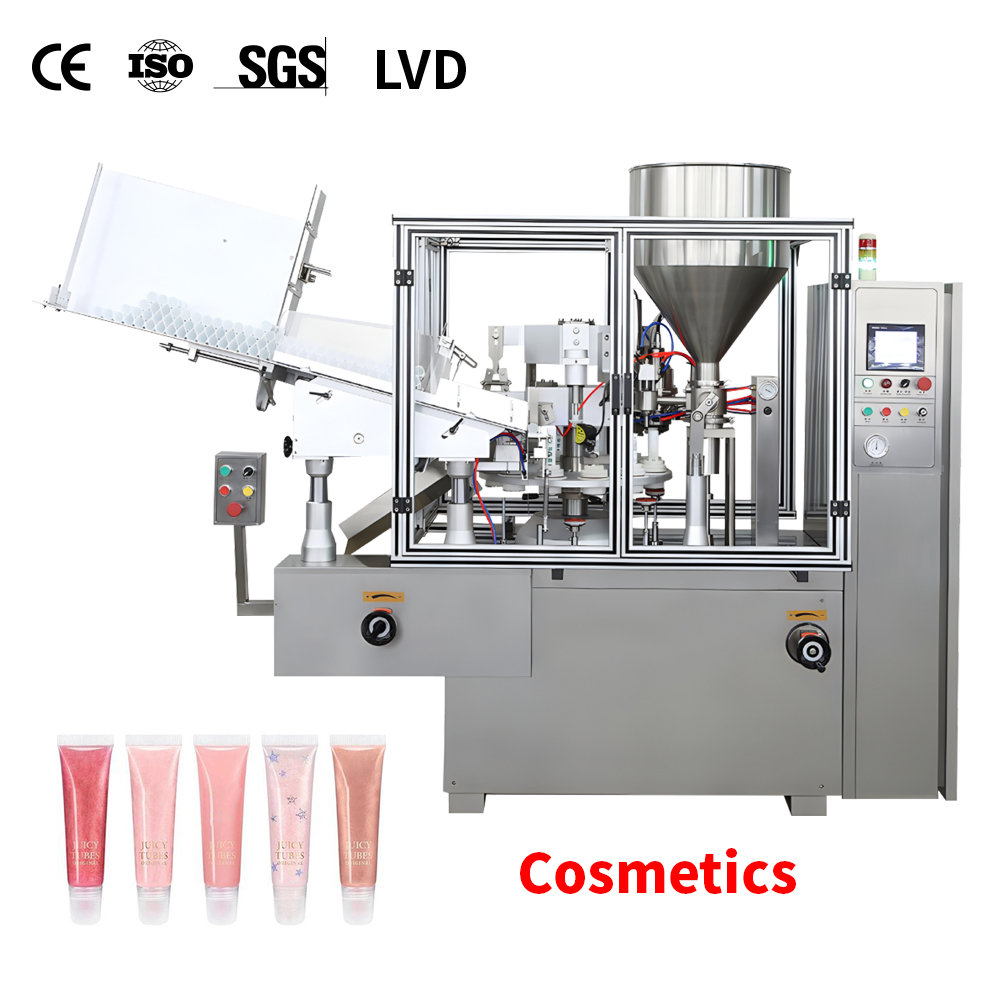
Lip gloss sits in a tricky high‑viscosity cosmetic segment, ranging from low‑viscosity oil‑based gloss to thick gel‑like tinted lip gloss with glitter, pearl powder and suspended pigment particles. Many cosmetic manufacturers run into consistent defects after purchasing filling equipment: inconsistent fill volume, glitter sediment segregation, bubble entrapment inside lip gloss tubes, nozzle clogging and cross‑contamination between formula batches. Most of these issues do not stem from poor machine build quality, but from improper model selection ignoring formula physical characteristics.
Lip Gloss Filling Machine
Lip gloss filling differs significantly from regular liquid cosmetic filling. Conventional piston fillers designed for lotion or toner often fail when deployed for lip gloss production. There are two mainstream technical architectures on the global market: servo piston filling and hot‑gear pump filling.
Servo piston filling suits wide‑formula versatility. It handles cold‑fill normal lip gloss, glitter‑added variants and small‑batch formula switching. Verified workshop test data shows that for 3 ml‑12 ml standard lip gloss containers, well‑calibrated servo piston units achieve ±0.05 ml dosing tolerance under stable ambient temperature 22‑26℃. The obvious weakness lies in high‑viscosity hot‑fill scenarios; when material temperature rises above 65℃, piston seal wear accelerates, shortening service intervals.
Hot‑gear pump filling targets mass‑production hot‑process lip gloss. Formulas are kept at 55‑70℃ inside heated hoppers to maintain fluidity and prevent pearl powder precipitation. Production test data records stable output up to 42‑48 containers per minute for inline automatic models. The limitation is poor adaptability for frequent formula changes; residual material inside pump cavities requires thorough disassembly cleaning, which increases change‑over time.
Critical auxiliary functions cannot be overlooked. Anti‑sediment agitation inside heated hoppers prevents glitter and shimmer particles from sinking to the bottom. Nozzle anti‑drip design eliminates stringing and residual material dripping onto lip gloss bottle shoulders, which creates high cosmetic‑grade reject rates. Vacuum de‑foaming feeding further reduces air bubbles trapped inside finished lip gloss, a major cause of inconsistent visual appearance and short shelf‑life complaints.
Based on cumulative production data collected from 17 cosmetic production workshops across Southeast Asia, Middle East and Eastern Europe from 2023‑2025:
Many buyers only reference maximum theoretical speed provided by vendors. Theoretical speed is achieved under ideal single‑formula continuous‑run conditions. Real‑world output will decline with formula switching, container replacement and daily equipment maintenance.
Cosmetic filling equipment contacts cosmetic‑grade raw materials directly, so material selection and structural design must satisfy international manufacturing requirements.
A common sourcing pitfall: suppliers provide general‑purpose 304 stainless‑steel machines and claim GMP compliance. 304 material cannot satisfy long‑term frequent cleaning with cosmetic‑grade alcohol and sanitising agents, leading to surface corrosion risk for cosmetic production.
A mid‑size cosmetic OEM plant operating in Southeast Asia produces multi‑variant lip gloss series, including plain oil gloss, high‑glitter tinted lip gloss and temperature‑sensitive gel‑type lip gloss. Initial procurement selected low‑cost gear‑pump automatic filling line. After commissioning, frequent glitter sedimentation, long formula‑switch cleaning time and seal‑component damage under frequent cold‑hot formula conversion occurred. Actual qualified output was far below projected capacity.
Later they re‑evaluated formula portfolio and switched to servo‑piston lip gloss filling machine with heated agitated hopper and anti‑drip nozzle assembly. Wetted components upgraded to 316L stainless steel complying with ISO 22716. After parameter tuning: dosing error stabilised within ±0.06 ml, overall product reject rate dropped from 9.4% down to 1.1%. Formula change‑over time reduced from 110 minutes to 35‑45 minutes with quick‑release structure. The line now handles mixed‑batch production of 3 000‑25 000 piece orders efficiently.
Key takeaway for buyers: do not pick high‑speed gear‑pump solution blindly if your production involves frequent formula switching and glitter‑loaded lip gloss variants.
A: Yes, but configuration prerequisites apply. It needs heated agitated hopper, anti‑sediment stirring module and quick‑disassembly wetted parts. Gear‑pump models struggle with frequent switching between these two categories; servo‑pump structure offers better compatibility.
A: Qualified cosmetic‑grade servo‑piston equipment achieves ±0.05‑0.08 ml stable tolerance under steady temperature environment. If workshop temperature fluctuates widely, accuracy will degrade obviously. Temperature stabilisation of raw material before filling is equally important.
A: Semi‑automatic fits R&D lab, small‑batch OEM, frequent‑SKU switching, annual capacity below 10 million pieces. Fully‑automatic integrated filling‑capping‑labelling line suits large‑volume stable‑SKU mass‑production projects.
A: Not universal. Only for formulas which require heating to maintain flowability. Cold‑fill lip gloss can run without heating hopper. Confirm your formula process requirement before ordering to avoid paying for unnecessary functions.
A: Focus on spare‑parts supply for piston seals, nozzles and stirring assemblies, on‑site commissioning guidance for cosmetic‑specific formula debugging, GMP‑compliant cleaning‑procedure documentation. Generic machinery after‑sales teams often lack experience with high‑viscosity cosmetic glitter‑containing media.
Written by Helen Xu | Chief Industrial Application Engineer
Helen Xu is a Chief Industrial Application Engineer with 9 years of specialized experience in packaging machinery and liquid filling machine design, equipment model selection, and full production line process optimization. She focuses on delivering customized packaging & filling solutions for pharmaceutical, food, and chemical manufacturing industries, with mature practical expertise in GMP compliance, ISO 9001 quality management standards, and turnkey large‑scale filling & packaging production line integration.
E-mail Us
Chat With Us
