
-
E-mail
-
WhatsApp & WeChat
WhatsApp & WeChat
 Blister Packaging Line
 Automatic Counting Machine Line
 Liquid Filling Machine Line
 Powder Filling Machine Line
 Granule Filling Machine Line
 Bag Packing Machine
 Auxiliary Machine
+86 151 6187 8967
Bottle Packing Machine
On a bottle packing line, the filler is rarely the constraint — the capper, the labeller, or the unscrambler is. Nine out of ten "slow line" complaints we investigate trace back to a station running 15–25% slower than the filler, starving or backing it up, so the whole line sits at the speed of its weakest node. Specifying a bottle packing machine means balancing stations, not just buying the fastest filler.
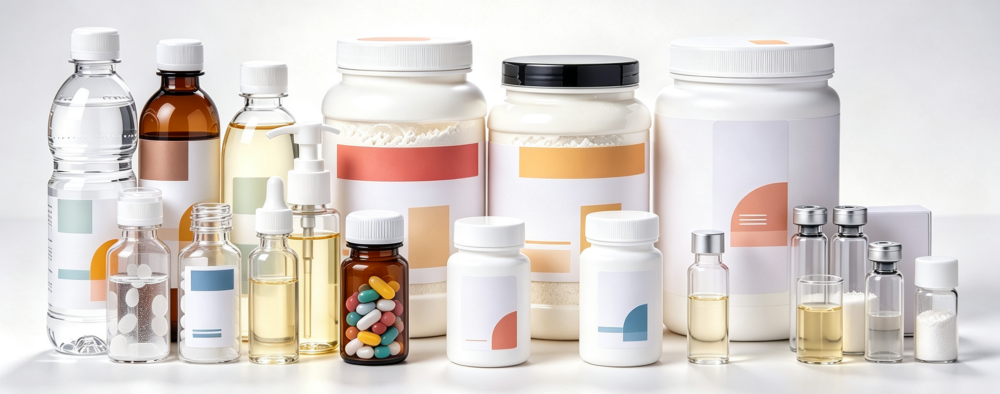
Bottle Packing Machine
Overall Equipment Effectiveness (OEE) on a bottle line is the product of availability, performance and quality across every station. A 12,000 bottles/hr filler bolted to a 9,000 bottles/hr capper delivers 9,000/hr, not 12,000. The table below is from a real pre-audit:
| Station | Rated (bottles/hr) | Actual (bottles/hr) | Loss driver |
|---|---|---|---|
| Unscrambler | 11,000 | 10,200 | Jam on oval bottle |
| Filler (16-head) | 12,000 | 11,400 | None |
| Capper (single) | 9,500 | 8,900 | Torque drift |
| Labeller | 12,000 | 10,800 | Web break |
| Cartoner | 10,000 | 9,600 | Manual infeed |
The line's true ceiling was 8,900 bottles/hr — set by the capper. Adding a second capping head lifted the whole line to 10,800 without touching the filler.
A Dubai contract packer running 500 ml HDPE supplement bottles at 9,000 bottles/hr fought a 4% cap-leak rejection. Ambient 41°C, RH 18% (dry). Root cause: cap torque drifted from 18 to 26 in-lb as the capper head warmed, over-tightening and cracking the liner.
Fix: switched to a servo capper with closed-loop torque feedback, added a cap chute ion bar (static was misthreading caps), and moved the filler to a longer dwell to cut aeration foaming. Result:
| Metric | Before | After |
|---|---|---|
| Line OEE | 61% | 78% |
| Cap-leak reject | 4.0% | 0.5% |
| Throughput | 8,900/hr | 9,400/hr |
| Foam-related underfill | 2.1% | 0.4% |
Field note: In Gulf summer, cap torque drifts because the capper head absorbs heat. Closed-loop torque feedback is not a luxury here — it is the difference between 4% and 0.5% leaks.
EU GMP Annex 1 for pharma supplements, 316L contact surfaces, CIP, and full batch traceability. CE machinery directive; verify guarding and e-stop topology. Serialization (FMD) is mandatory for prescription product.
FDA 21 CFR 210/211 for pharma, cGMP cleaning validation, UL/NRTL electrical. Nutraceutical lines still need documented sanitation.
Halal certification governs lubricants and CIP chemistry. High humidity demands a dry-zone design at the capper to avoid cap corrosion.
GCC/SASO conformity, Arabic labeling, and heat-tolerant torque control. Foil induction seals are common for tamper evidence in the Gulf retail channel.
Below 6,000 bottles/hr and one bottle type, monoblock saves floor space and transfer loss. Above that or many SKUs, separate rotary stations are easier to balance and service.
Torque drift from a warming capper head. Closed-loop servo torque fixes it; a pneumatic capper will keep drifting.
A balanced, well-maintained line runs 75–85% OEE. If a supplier promises 95%, ask which losses they are excluding.
For tamper evidence and leak safety in hot transit (Gulf, SEA), yes. It adds a station and a cap with induction liner.
Written by Helen Xu | Chief Industrial Application Engineer
Helen Xu is a Chief Industrial Application Engineer with 9 years of specialized experience in packaging machinery and liquid filling machine design, equipment model selection, and full production line process optimization. He focuses on delivering customized packaging & filling solutions for pharmaceutical, food, and chemical manufacturing industries, with mature practical expertise in GMP compliance, ISO 9001 quality management standards, and turnkey large-scale filling & packaging production line integration.
E-mail Us
Chat With Us


