
-
E-mail
-
WhatsApp & WeChat
WhatsApp & WeChat
 Blister Packaging Line
 Automatic Counting Machine Line
 Liquid Filling Machine Line
 Powder Filling Machine Line
 Granule Filling Machine Line
 Bag Packing Machine
+86 151 6187 8967
Automatic Pouch Packaging Machine
On an automatic pouch packaging machine, the number that decides payback is changeover time between formats, not rated pouches per minute. I have watched a plant lose 22% of its shift to format swaps on a machine rated at 120 pouches/min, because each swap needed 28 minutes and three tool changes. Moving to tool-free changeover cut that to 9 minutes and recovered the lost shift. If the quotation leads with speed and never states changeover minutes, you are buying a single-format machine sold as flexible.
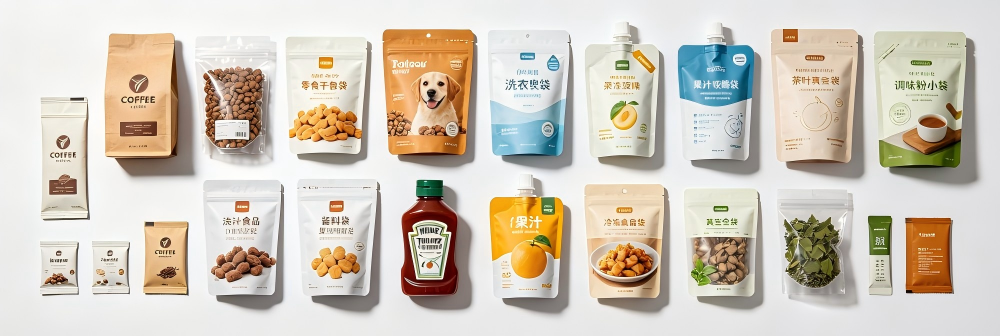
Automatic Pouch Packaging Machine
A rated speed of 120 pouches/min only matters during the run. Between runs — and most contract and private-label plants swap formats daily — the machine earns nothing while it is being rebuilt. A format swap that takes 28 minutes, three times a shift, removes 84 minutes of paid production every shift, or roughly 22% of an eight-hour day. That lost capacity is invisible on the quotation and dominant on the floor. Treat changeover time as the first capacity number, speed as the second.
"Pouch" covers four families that share almost nothing mechanically. A flat 3-side sachet, a stand-up doypack with a zip, a spouted pouch, and a shaped promotional pouch each need a different forming box, different sealing jaws, and often a different film path. The machine that runs all four is not one machine with settings; it is one frame carrying four tool sets.
| Format | Tool changes | Typical swap time (tooled) | Typical swap time (tool-free) |
|---|---|---|---|
| Flat 3-side sachet | Forming box, jaws | 18–25 min | 4–7 min |
| Stand-up doypack + zip | Box, zip module, jaws | 25–35 min | 8–12 min |
| Spouted pouch | Spout inserter, box, jaws | 35–50 min | 12–18 min |
| Shaped/promo pouch | Full tool set | 45–70 min | 18–25 min |
Tool-free does not mean no work — it means the format is set by servo-positioned rails, stored recipes, and quick-release boxes rather than wrenches and swapped parts. The cost premium is 12–20% on the frame, paid back in the first months if you swap more than once a day. Tooled changeover is cheaper to buy and fine if you run one SKU for weeks; it is a trap the moment the customer mix diversifies.
The plant ran a horizontal form-fill-seal pouch machine on three formats — a 90 g sauce flat sachet, a 250 g stand-up doypack with zip, and a 400 g spouted pouch — across two shifts. Original configuration was tooled: each swap needed removing and refitting the forming box and sealing jaws, averaging 28 minutes, three swaps per shift.
We converted to servo-positioned rails with recipe storage and quick-release boxes, and moved the zip and spout modules to swing-arm mounts. Swap time fell to 9 minutes average; the plant recovered roughly 57 minutes per shift of paid production and absorbed a fourth weekly format without adding hours. Speed held at 110 pouches/min on the sachet and 70 on the doypack.
| Parameter | Before | After |
|---|---|---|
| Average changeover | 28 min | 9 min |
| Paid production recovered | — | ~ 57 min/shift |
| Weekly formats handled | 3 | 4 |
| Speed (sachet / doypack) | 110 / 70 ppm | 110 / 70 ppm |
CE marking under the Machinery Regulation; food contact under EU 10/2011. For pharma or nutraceutical pouches, EU GMP Annex 11 data integrity and ISO 15378 apply, and each format is a validated set. Recipe storage must be locked and auditable.
FDA 21 CFR 110 for food contact; nutraceutical pouches may fall under cGMP. Net quantity follows NIST Handbook 133. Zip and child-resistant features on certain products add validation.
Thailand, Vietnam, and Indonesia set food-contact and labelling rules; halal covers the Muslim market and line cleaning. Humid ambient makes film registration and zip sealing the local failure mode, so climate compensation belongs in commissioning.
Saudi SFDA and GCC anchor conformity; halal (SASO/GSO) is mandatory. Summer heat pushes film tension and seal-window retuning to the front of any multi-format line.
If you swap more than once a day, tool-free pays back in months. If you run one SKU for weeks, tooled is cheaper to buy. Buying tooled for a diversifying mix is the common overspend.
Yes — a doypack runs slower than a flat sachet on the same frame. Quote speed per format, not a single headline number, or you will mis-size the line.
15–40 m before registration locks, more on tooled swaps. Tool-free trims it but never eliminates it; budget it into cost-per-pouch.
Under EU GMP or FDA, yes. Four formats mean four dossiers. Recipe-locked parameters turn re-validation into paperwork, not a re-run.
Written by Helen Xu | Chief Industrial Application Engineer
Helen Xu is a Chief Industrial Application Engineer with 9 years of specialized experience in packaging machinery and liquid filling machine design, equipment model selection, and full production line process optimization. He focuses on delivering customized packaging & filling solutions for pharmaceutical, food, and chemical manufacturing industries, with mature practical expertise in GMP compliance, ISO 9001 quality management standards, and turnkey large-scale filling & packaging production line integration.
E-mail Us
Chat With Us


