
-
E-mail
-
WhatsApp & WeChat
WhatsApp & WeChat
 Blister Packaging Line
 Automatic Counting Machine Line
 Liquid Filling Machine Line
 Powder Filling Machine Line
 Granule Filling Machine Line
 Bag Packing Machine
+86 151 6187 8967
Jun. 26, 2026
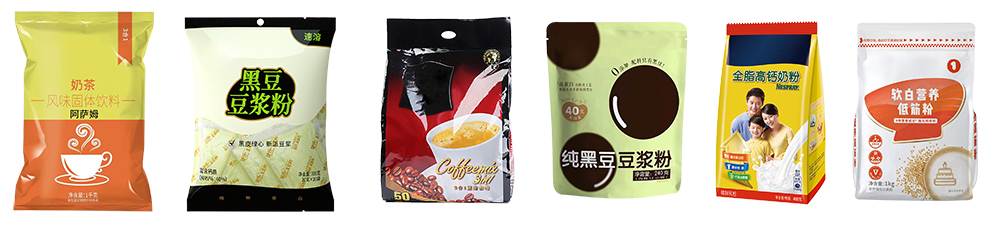
A single industrial powder filling and sealing machine can handle a wide range of bag or bottle sizes, provided the container dimensions stay within the physical limits of the mechanical gripper or conveyor tracking system; however, true operational efficiency depends entirely on whether the changeover is executed via manual mechanical adjustments (30 to 45 minutes) or via automated, recipe-driven servo systems (under 5 minutes).
For international procurement managers, failing to match machine flexibility with production mix is a leading cause of lost efficiency. Over-engineering a machine for size ranges that are never used wastes capital. Conversely, choosing a rigid, low-cost system for a facility that runs multiple products leads to excessive downtime and high operating costs.
Architectural Reality: Pouch vs. Rigid Container Mechanics
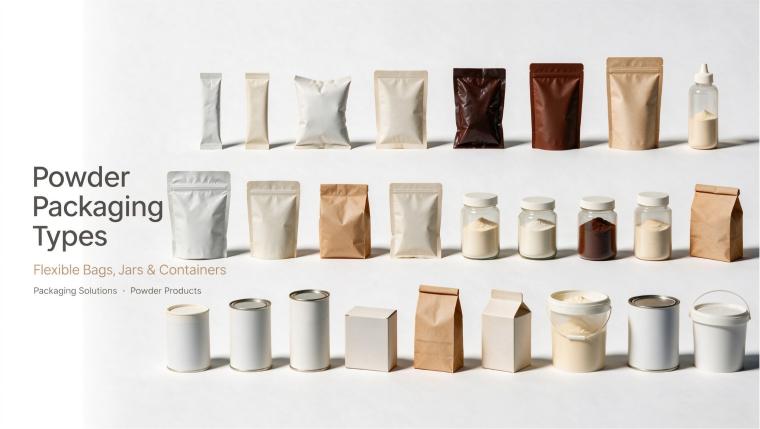
The mechanical engineering behind size flexibility is split into two categories based on the primary packaging format.
In rotary premade pouch machines, size adjustment focuses on the mechanical gripper width. To accommodate a shift from a 100g stand-up pouch (doypack) to a 1kg gusseted bag, the system must adjust the radial distance of all gripping arms simultaneously.
For Vertical Form Fill Seal (VFFS) systems, changing bag width requires swapping out the entire physical forming collar (forming tube assembly). This determines the flat web width of the flexible film before longitudinal heat-sealing.
For rigid lines, the filling and sealing machine relies on physical handling components called Format Parts. These components guide, secure, and transport containers through the indexing cycle. They include:
Infeed timing screws
Starwheels
Outer guide rails
Capping/sealing chucks matched to specific neck diameters
Technical Performance Matrix: Changeover Breakdown
| Machine Sub-Type | Size Range Capabilities | Tool-Less Manual Changeover Time | Automated Servo-Driven Changeover Time | Critical Engineering Bottleneck |
| Rotary Premade Pouch Machine |
Width: 100mm – 320mm Length: 130mm – 450mm |
25 – 35 Mins (Manual hand-crank + mechanical stops) |
< 3 Mins (HMI input triggering synchronous servo adjustment) |
Gripper arm alignment and suction cup vacuum position synchronization. |
| Vertical Form Fill Seal (VFFS) |
Bag Width: 60mm – 200mm (Determined by tube) |
15 – 20 Mins (Physical replacement of the forming shoulder assembly) |
N/A (Forming tubes require physical manual extraction) |
Film tracking tracking alignment and sealing jaw pressure calibration. |
| Rigid Inline Bottling & Capping Line |
Diameter: 30mm – 120mm Height: 50mm – 250mm |
40 – 50 Mins (Tooling swap: Starwheels, guides, chucks) |
< 8 Mins (Motorized guide rails + quick-release chuck mechanisms) |
Capping chuck torque calibration and conveyor rail height adjustments. |
Engineering Deep Dive: The True Cost of Downtime and SMED Methodology
In high-throughput packaging environments, changeover time must be managed using the Single-Minute Exchange of Die (SMED) methodology. This process separates tasks into internal steps (done while the machine is stopped) and external steps (prepared while the line is running).
[Traditional Changeover: 45 Mins Stop Time]
├── Stop Line ──► [Remove Parts] ──► [Clean Machine] ──► [Install Parts] ──► [Test Run & Calibrate]

[SMED-Optimized Changeover: 8 Mins Stop Time]
■ Pre-stage cleaned format parts while line runs (External)
├── Stop Line ──► [Quick-Release Swap] ──► [Load HMI Recipe] ──► Resume Line
The primary cause of lost productivity during manual changeovers is not swapping the parts themselves. It is the subsequent fine-tuning required to get the line running correctly.
When operators rely on uncalibrated hand-cranks, subtle errors in gripper alignment or sealing jaw pressure lead to folded pouch edges, off-center filling, and poor thermal seals. This troubleshooting often extends a 15-minute parts swap into a 60-minute trial-and-error process, resulting in significant material waste.
Modern high-flexibility machines use multi-axis synchronized servo systems. When a new recipe is selected on the HMI, dedicated servos adjust the conveyor rail widths, gripper configurations, and filling nozzle stroke profiles to programmed coordinates within millimeters. This eliminates manual adjustment errors and ensures the first package off the line is sealed correctly.
Real-World Industrial Case Studies
The Plant Setting: A contract manufacturing facility running 4 separate SKUs of whey protein daily, shifting between 250g, 500g, and 1kg stand-up pouches.
The Problem: The plant used an older rotary pouch sealer with manual hand-crank adjustments. Daily changeovers averaged 110 minutes of cumulative downtime, dropping overall equipment effectiveness (OEE) to 62% and creating bottlenecks during peak production.
The Solution: The facility upgraded to a 2026-spec rotary premade pouch line featuring full servo-driven gripper adjustment and quick-clamp sealing jaws compliant with CE machinery directives.
The Result: Size changeover times dropped from 35 minutes per shift to exactly 2 minutes and 42 seconds via HMI touch selection. The plant reclaimed 82 hours of available production capacity annually, paying back the machine's premium cost within 7 months of installation.
The Plant Setting: An international facility packaging nutritional powders into HDPE jars ranging from 200ml to 750ml volumes.
The Problem: Cross-contamination concerns meant format parts had to be completely sterilized during changeovers. Using bolted starwheels required mechanical tools inside the clean area, which increased contamination risks and extended changeover times to 55 minutes.
The Solution: The production line was re-engineered with tool-less blue-anodized POM (Polyoxymethylene) format parts held by quick-release retaining pins, paired with a pneumatic, variable-torque capping head.
The Result: Operators could remove, sanitize, and replace the starwheels and guide assemblies without using wrenches. Changeover time dropped to 12 minutes, and the system fully met ISO 22000 food safety and sanitation protocols.
Procurement Pitfalls & Avoidance Guide
When sourcing a multi-size powder sealing system, protect your operational margins by watching out for these common engineering mistakes:
Pitfall 1: Ignoring the Extreme Ends of the Spec Sheet
The Danger: A machine rated for 100mm to 300mm pouches often struggles at its minimum or maximum limits. At 100mm, gripper fingers may experience clearance issues with the filling nozzle. Always ask for factory testing videos showing the machine running at both extreme ends of the size specification sheet.
Pitfall 2: Overlooking Hopper and Auger Tooling Changes
The Danger: Adjusting the sealing machine's width does not change the physics of the powder dosage. Going from a 30mm bottle neck to an 80mm jar mouth requires changing the internal dosing auger screw and funnel nozzle to prevent product clipping. Ensure your quotation includes these complementary dosing format parts.
Pitfall 3: Sacrificing Sealing Jaw Geometry
The Danger: Wider pouches require higher, more uniform pressure across the sealing surface. If a machine utilizes a weak, single-cylinder pneumatic press for its sealing jaws, transitioning to wider bags can lead to pressure drops at the outer edges, resulting in weak seals and product leaks. Insist on dual-cylinder or servo-driven mechanical sealing jaws for pouch widths exceeding 250mm.
Industry FAQ: Technical Deep Dive
Engineer Answer: No. The handling mechanisms are fundamentally different. A pouch sealing machine uses vacuum suction cups, mechanical grippers, and thermal/ultrasonic sealing bars. A bottle line requires structural starwheels, conveyor rails, and rotary capping or induction sealing systems.
To run both, you must install a modular production line where a single upstream auger filler pivots or switches between two distinct, downstream sealing tracks.
Engineer Answer: For rigid container handling, a standard starwheel can typically tolerate a diameter variance of $\pm 3\text{mm}$ before it begins to scuff or misfeed containers. If your bottle diameters vary by more than this threshold, you must purchase a dedicated set of format parts for each unique bottle diameter to maintain proper tracking control.
Engineer Answer: If you shift from a standard 80-micron PET/PE laminated pouch to a thick, 120-micron Kraft paper/AL/PE barrier bag, physical dimension adjustments are only half the battle.
The changeover process must also adjust the thermal sealing parameters (increasing jaw temperature or dwell time) via the HMI to ensure adequate heat penetration through the thicker material, satisfying ASTM F88 seal strength testing standards.
Written by Helen Xu | Chief Industrial Application Engineer
Helen Xu is a Chief Industrial Application Engineer with 9 years of specialized experience in packaging machinery and powder filling machine design, equipment model selection, and full production line process optimization. He focuses on delivering customized packaging & filling solutions for pharmaceutical, food, and chemical manufacturing industries, with mature practical expertise in GMP compliance, ISO 9001 quality management standards, and turnkey large-scale filling & packaging production line integration.
Related Products
Chat With Us


