
-
E-mail
-
WhatsApp & WeChat
WhatsApp & WeChat
 Blister Packaging Line
 Automatic Counting Machine Line
 Liquid Filling Machine Line
 Powder Filling Machine Line
 Granule Filling Machine Line
 Bag Packing Machine
+86 151 6187 8967
Jun. 26, 2026
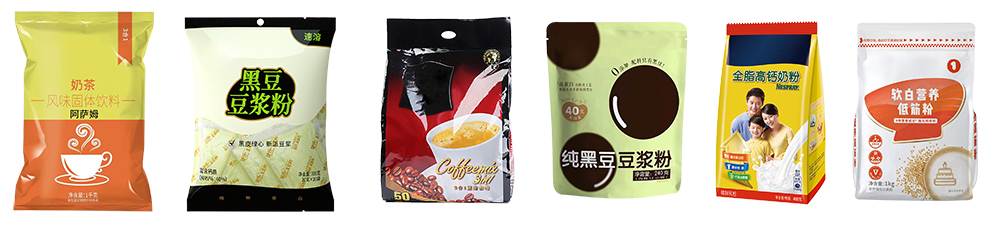
The critical prerequisite for selecting a packaging line for non-free-flowing or highly dusty powders is the deployment of mechanical forced displacement combined with positive dust containment; relying on standard volumetric cup fillers or gravity-fed systems will inevitably lead to severe weight fluctuations, persistent seal contamination, and catastrophic product leakage.
When international procurement managers specify equipment for complex bulk solids—such as whey protein concentrates, ultrafine pharmaceutical excipients, TiO₂ pigments, or hygroscopic chemical blends—they often treat all powder packaging systems as fundamentally interchangeable. This engineering miscalculation represents the primary cause of unplanned factory downtime, high product giveaway, and failed quality control checks in automated packaging lines.
Technical Analysis: The Science of Powder Flowability and Mechanical Challenges
Free-flowing materials, such as granulated sugar or salt, move independently under the force of gravity. Non-free-flowing powders, conversely, are defined by an Angle of Repose greater than 45° and a high Hausner Ratio (greater than 1.25), calculated as:
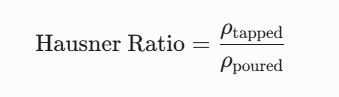
These values indicate high inter-particle cohesion, often caused by electrostatic charges, fat content, or hygroscopic characteristics. When subjected to pressure, these powders compress and form bridges across hopper openings rather than flowing smoothly.
Ultrafine particles (under 50 microns) become easily entrained in air during high-speed vertical drops. When a machine drops dusty powder freely from a standard nozzle into a container or pouch, the displaced air forces dust upward. This airborne particulate settles on the inner sealing surfaces of the flexible film or container rim, preventing proper thermal bonding during the subsequent heat-sealing cycle.
Machine Selection Matrix for Hard-to-Handle Powders
| Powder Characteristics | Core Challenge | Critical Mechanical Solution | Industry Standard Metric |
|
Non-Free-Flowing Only (e.g., Cocoa powder, flour, starch) |
Bridging, rat-holing, mechanical compaction. | Servo-driven vertical auger with an independent, slow-speed counter-rotating agitation blade. |
Target Accuracy: $\pm 0.3\%$ to $\pm 1\%$ volumetric variance. |
|
Highly Dusty / Airborne (e.g., Talcum, pharmaceutical excipients) |
Seal contamination, ambient air pollution, product loss. | "Bottom-up" lift mechanism with integrated vacuum dust-extraction shrouds. |
Airflow Target: 200–300 CFM localized negative pressure. |
|
Highly Cohesive & Variable Density (e.g., Whey protein isolate, milk derivatives) |
Weight drift due to batch aeration and environmental humidity shifts. | Net-weight filling system with real-time load cell data feedback loops. |
Reject Rate Goal: Fewer than 2 packages per 1,000 runs outside ASTM E617 tolerances. |
Key Technical Solutions: Overcoming Material Flaws through Mechanical Engineering
For non-free-flowing powders, a standard hopper acts as a bottleneck. Equipment must feature an integrated, low-speed agitator bar that rotates independently of the primary dosing auger. This mechanism continuously breaks down the powder's internal structure just above the feed screw, maintaining a constant bulk density in the throat of the machine and ensuring the flights of the auger fill evenly on every cycle.
To manage airborne dust, standard gravity drops must be replaced with a servo-driven mechanical lift platform. During the dosing sequence, the pouch or rigid container rises vertically until the discharge nozzle rests near the bottom of the vessel.
As the auger turns, the container descends dynamically at a speed synchronized with the filling rate. This design keeps the distance between the product surface and the tip of the nozzle under 15 mm, eliminating the high-velocity free fall that triggers dust generation.
[Nozzle Inserted Deep Into Pouch Base]
               │
               ▼
[Auger Commences Variable Rotation Cycle]
               │
               ▼
[Platform Lowers Dynamically (Gap Maintenance < 15mm)]
               │
               ▼
[Vacuum Shroud Captures Residual Particulates]
               │
               ▼
[Clean Seal Area Moves to Thermal Sealing Jaws]
The filling head must feature an integrated, annular vacuum ring connected to a central dust collection system. By maintaining negative pressure directly around the pouch mouth during the fill, stray particles are drawn away from the seal zone before the heat-sealing jaws close.
Real-World Industrial Case Studies
The Plant Setting: A high-output flour milling and packing plant located in Southeast Asia.
The Problem: The factory operated a standard rotary Premade Pouch Filling Machine processing 1kg paper gusset bags. High airborne dust fouled the top seal area, generating a 4.2% seal failure rate on the retail shelf and requiring constant line shutdowns for jaw cleaning.
The Solution: The plant replaced its gravity-drop feeding system with an automatic vertical auger filler featuring air-operated pinch valves at the nozzle tip and a pneumatic pouch-tapping device. A localized dual-port vacuum extraction hood was added directly over the sealing station.
The Result: Seal failure rates dropped below 0.15%. The plant saved an estimated $24,500 annually in reduced product loss and eliminated 40 minutes of manual cleaning per 8-hour shift.
The Plant Setting: A European dairy processing facility operating under strict cleanroom standards.
The Problem: The facility was packaging high-fat infant formula into 900g rigid tin cans. Due to density shifts between bulk batches, the existing volumetric auger line exhibited a weight drift of ±8.5g, forcing the plant to overfill cans to guarantee compliance with label weights.
The Solution: Engineers integrated a dual-stage filling layout. Station 1 utilized a high-speed volumetric auger to dispense a bulk fill of roughly 95% of the target weight. Cans then advanced onto an inline load cell that measured the precise intermediate weight and transmitted that data to Station 2—a fine-dosing dribble auger that topped off the remaining product by weight.
The Result: The system achieved a final accuracy of $\pm 1.2\text{g}$ with a 99.7% confidence interval, complying with ISO 9001:2015 quality targets and saving 6.1 metric tons of product giveaway in the first year of operation.
Pre-Procurement Checklist & Avoidance of Common Selection Pitfalls
Pitfall 1: Relying on Clutch/Brake Auger Controls
Why it fails: Traditional clutch/brake mechanical drives lack the resolution needed for cohesive powders. For non-free-flowing powders, always specify brushless AC servo motors with direct optical encoder feedback to control the exact rotational degree of the screw.
Pitfall 2: Neglecting Tool-less Disassembly Options
Why it fails: Fine powders migrate into mechanical joints. If a machine requires a technician to remove multiple bolts just to pull out the auger screw for sanitation, your changeover times will impact overall plant efficiency. Demand a split-hinged hopper design and quick-release sanitary clamps.
Pitfall 3: Overlooking Material Certifications
Why it fails: Fine powders can absorb moisture or pit base metals if acidic. Ensure all product-contact surfaces are specified as 316L Stainless Steel with a surface roughness finish of $Ra \le 0.4\,\mu\text{m}$ to minimize physical particle adhesion.
Industry FAQ: Technical Deep Dive
Engineer Answer: It depends entirely on the material's fluidic behavior. Free-flowing powders require a spinner disc (dripless collector plate) at the end of the auger tube; when rotation stops, the material rests on the disc at its natural angle of repose, blocking further flow. Non-free-flowing powders require a straight tube or a pressure plate/clack valve assembly to mechanically force cohesive product through without packing or binding inside the nozzle tip.
Engineer Answer: If you are packaging flammable organic powders (e.g., starch, sugar, or specific chemical resins), the fine airborne dust creates an explosion risk. The entire machine wiring, motor enclosures, and HMI control cabinets must be rated under ATEX Directive 2014/34/EU (Zone 21 or 22) in Europe or comply with NEC Class II, Division 1 or 2 guidelines in North America.
Engineer Answer: This issue is typically caused by temperature-driven changes in the powder's characteristics or shifts in ambient humidity within the facility. As humidity increases throughout the day, non-free-flowing powders absorb moisture, altering their bulk density.
To correct this without manual intervention, integrate an automatic gravimetric feedback loop (checkweigher feedback link) down-line from the filling head. The checkweigher continually samples finished packages and signals the upstream servo motor to adjust its rotation count in real time to offset density drift.
Author Profile
Written by Helen Xu | Chief Industrial Application Engineer
Helen Xu is a Chief Industrial Application Engineer with 9 years of specialized experience in packaging machinery and powder filling machine design, equipment model selection, and full production line process optimization. He focuses on delivering customized packaging & filling solutions for pharmaceutical, food, and chemical manufacturing industries, with mature practical expertise in GMP compliance, ISO 9001 quality management standards, and turnkey large-scale filling & packaging production line integration.
Related Products
Chat With Us


